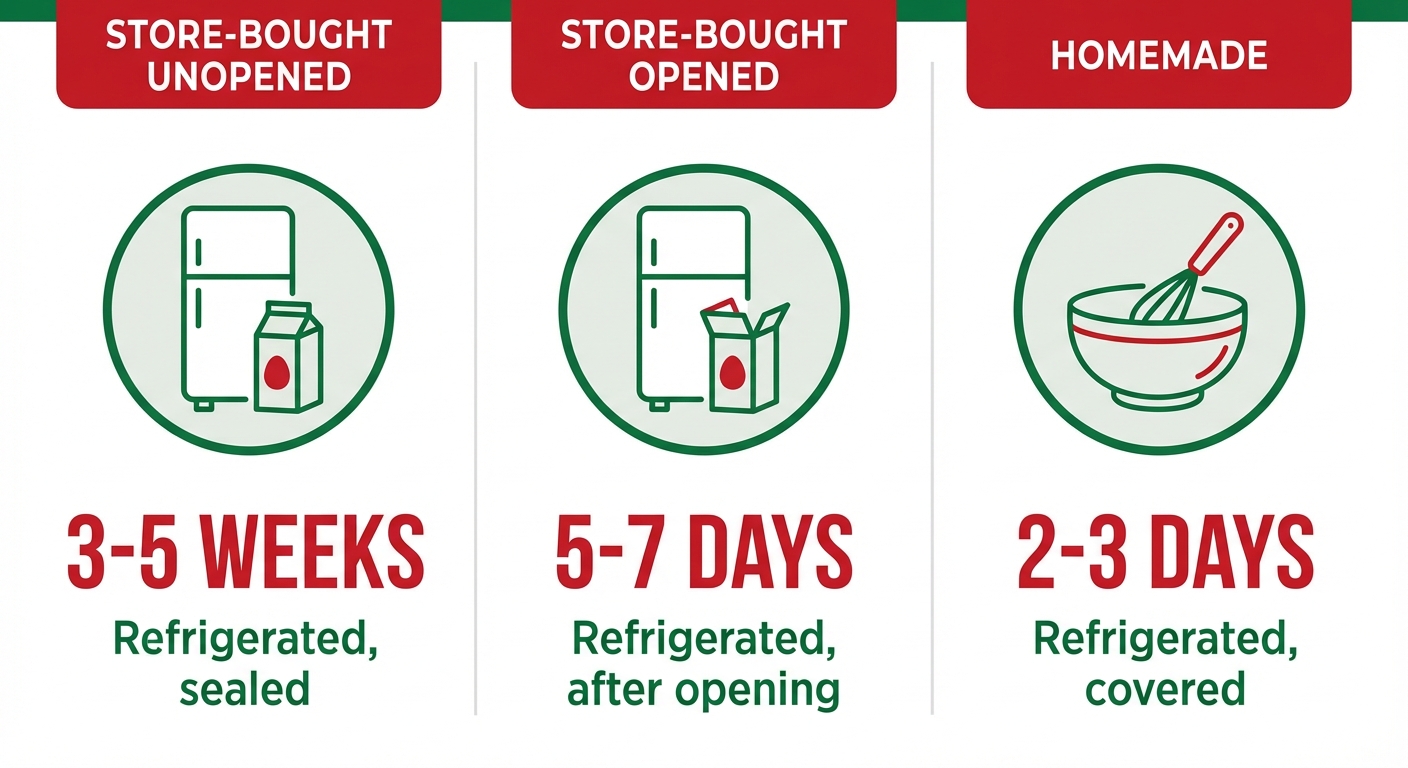
How long does eggnog last? Store-bought eggnog that’s been opened lasts 5 to 7 days in the refrigerator. Unopened, it stays good until the printed expiration date, typically 3 to 5 weeks from purchase if kept refrigerated. Homemade eggnog has a shorter shelf life of 2 to 3 days due to raw or lightly cooked eggs. Adding alcohol extends homemade eggnog’s life slightly but doesn’t eliminate food safety concerns.
The difference comes down to pasteurization. Commercial eggnog is made with pasteurized eggs and dairy, then heat-treated to kill bacteria. Homemade versions using raw eggs carry salmonella risk and must be consumed quickly or made with pasteurized eggs.
Store-Bought Eggnog Storage
Commercial eggnog from the refrigerated section should stay in the coldest part of your refrigerator, typically the back of a shelf rather than the door where temperatures fluctuate. Keep it at or below 40 degrees Fahrenheit.
Before opening, trust the sell-by or use-by date on the package. Most refrigerated eggnog has a shelf life of 3 to 5 weeks. Once you break the seal, the countdown begins. Finish the carton within 5 to 7 days regardless of what the original date says. Write the opening date on the carton so you don’t lose track.
Shelf-stable eggnog sold in cartons at room temperature can last months unopened. Once opened, treat it like refrigerated eggnog and consume within 5 to 7 days while keeping it cold.
Homemade Eggnog Safety
Traditional homemade eggnog recipes call for raw eggs, which creates food safety considerations. Raw eggs can contain salmonella bacteria, which causes food poisoning with symptoms including nausea, diarrhea, fever, and abdominal cramps. While the risk per egg is relatively low, it’s not zero.
If you make eggnog with raw eggs, consume it within 2 to 3 days and keep it refrigerated the entire time. Never leave it at room temperature for more than 2 hours. The elderly, young children, pregnant women, and people with weakened immune systems should avoid raw egg eggnog entirely.
For safer homemade eggnog, use pasteurized eggs or egg products. You can also cook the egg mixture to 160 degrees Fahrenheit, stirring constantly, then cool it before adding other ingredients. This kills potential bacteria while still giving you the creamy texture.
Does Alcohol Preserve Eggnog?
Adding bourbon, rum, or brandy to eggnog provides some antimicrobial effect, but probably not as much as you’d hope. Alcohol can inhibit bacterial growth, but the concentrations in typical spiked eggnog aren’t sufficient to make it shelf-stable.
One tradition suggests making heavily spiked eggnog and aging it for weeks, relying on alcohol concentration to preserve it. This works only if the alcohol content is quite high, around 20 percent by volume, which makes for a strong drink. Even then, it should be refrigerated.
For typical spiked eggnog with a splash of spirits, follow the same storage guidelines as unspiked versions. The alcohol adds flavor but doesn’t meaningfully extend shelf life for food safety purposes.
Signs Eggnog Has Gone Bad
Trust your senses to identify spoiled eggnog. Fresh eggnog has a smooth, creamy consistency and sweet, spiced aroma with vanilla and nutmeg notes.
Spoiled eggnog may develop a sour or off smell, distinct from its normal sweet scent. The texture might become lumpy or separated rather than smooth. If you see any mold growth or significant color changes, discard it immediately. When in doubt, throw it out. Food poisoning isn’t worth the risk.
Summary
Store-bought eggnog keeps 5 to 7 days after opening when refrigerated properly. Homemade eggnog with raw eggs should be consumed within 2 to 3 days. Alcohol adds flavor but doesn’t significantly extend shelf life. Trust expiration dates for unopened products, and trust your nose if anything smells off after opening.