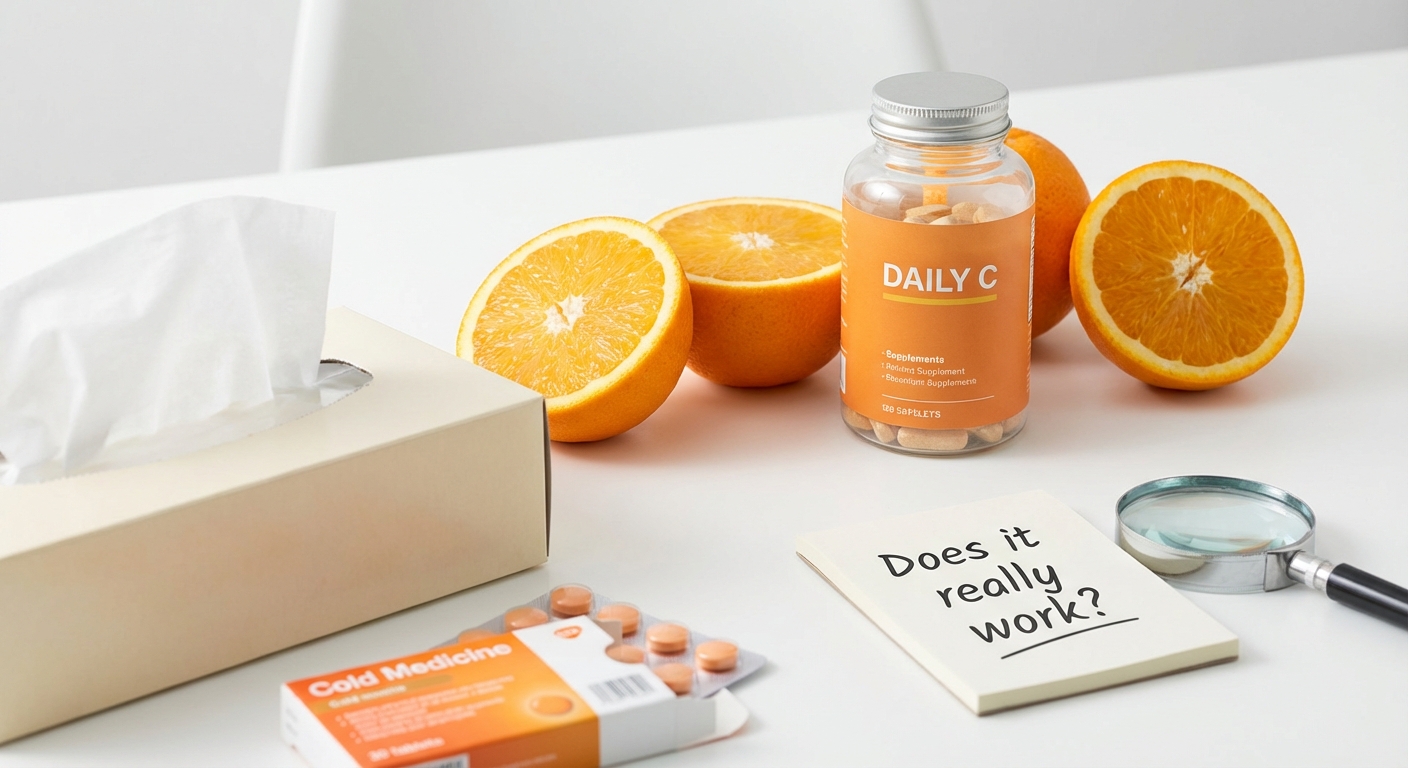
Does vitamin C prevent colds? No, vitamin C does not prevent colds in the general population. This is one of the most persistent health myths, but decades of research have failed to support it. However, the picture is more nuanced than a simple no. Regular vitamin C supplementation appears to slightly reduce how long colds last and may help prevent colds in people under extreme physical stress, like marathon runners.
The belief that vitamin C prevents colds traces largely to Nobel laureate Linus Pauling, who championed megadose vitamin C in the 1970s. His enthusiasm influenced millions, but subsequent controlled studies haven’t validated his claims for cold prevention in everyday circumstances.
What the Research Shows
A comprehensive Cochrane review analyzed 29 trials involving over 11,000 participants taking at least 200 mg of vitamin C daily. The conclusion was clear: regular vitamin C supplementation does not reduce the incidence of colds in the general population. People taking vitamin C caught colds just as often as those taking placebos.
The same review found something more interesting about duration. Among those who did catch colds, regular vitamin C users had slightly shorter illnesses: about 8 percent shorter in adults and 14 percent shorter in children. For an average cold lasting about a week, that’s roughly half a day less of symptoms. Noticeable, perhaps, but hardly the dramatic protection many expect.
Taking vitamin C after cold symptoms start appears useless. Studies of therapeutic vitamin C, meaning doses taken once you’re already sick, show no consistent benefit for duration or severity. The modest duration benefit applies only to people who were taking vitamin C regularly before getting sick.
The Exception: Extreme Physical Stress
One group does appear to benefit from vitamin C for cold prevention: people under severe physical stress. Studies of marathon runners, skiers, and soldiers in subarctic training found that vitamin C supplementation cut cold incidence roughly in half.
This likely relates to how extreme exercise temporarily suppresses immune function. The phenomenon called the “open window” hypothesis suggests that strenuous exercise creates a period of increased infection susceptibility. Vitamin C’s antioxidant properties may help mitigate this exercise-induced immune suppression.
For typical office workers and students, this exception doesn’t apply. But if you’re training for an ultramarathon or regularly engaging in extreme endurance activities, vitamin C supplementation might offer some cold-prevention benefit.
Why the Myth Persists
Several factors explain why people still believe vitamin C prevents colds despite the evidence. Confirmation bias plays a major role. When you take vitamin C and don’t get sick, you credit the vitamin. When you take it and do get sick, you assume it would have been worse without it. This reasoning is impossible to disprove but doesn’t constitute evidence.
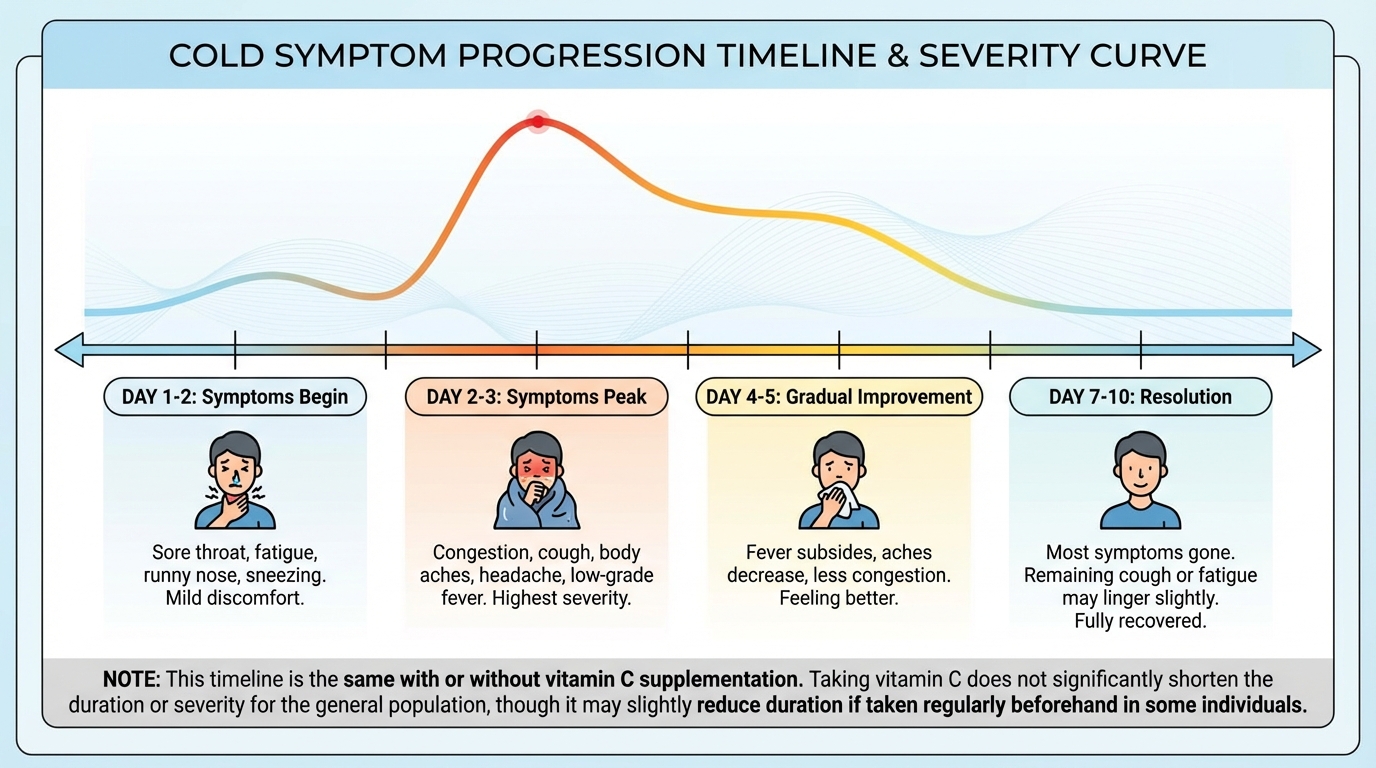
The natural course of colds also creates false impressions. Most colds peak within a few days and resolve within a week regardless of treatment. Starting vitamin C when symptoms appear means improvement follows naturally, creating an illusion of causation.
Finally, vitamin C is cheap, safe at reasonable doses, and widely marketed. Supplement companies profit from the belief, and the “can’t hurt, might help” logic appeals to consumers seeking control over their health.
Should You Take Vitamin C?
Vitamin C is an essential nutrient, and deficiency causes serious problems including scurvy. Most people get adequate vitamin C from diet, especially if they eat fruits and vegetables. Citrus fruits, strawberries, bell peppers, broccoli, and tomatoes are excellent sources.
Supplementation beyond basic nutritional needs doesn’t appear to offer cold-prevention benefits for most people. However, vitamin C supplements are inexpensive and safe at doses up to 2,000 mg daily for adults. Higher doses may cause digestive upset and increase kidney stone risk in susceptible individuals.
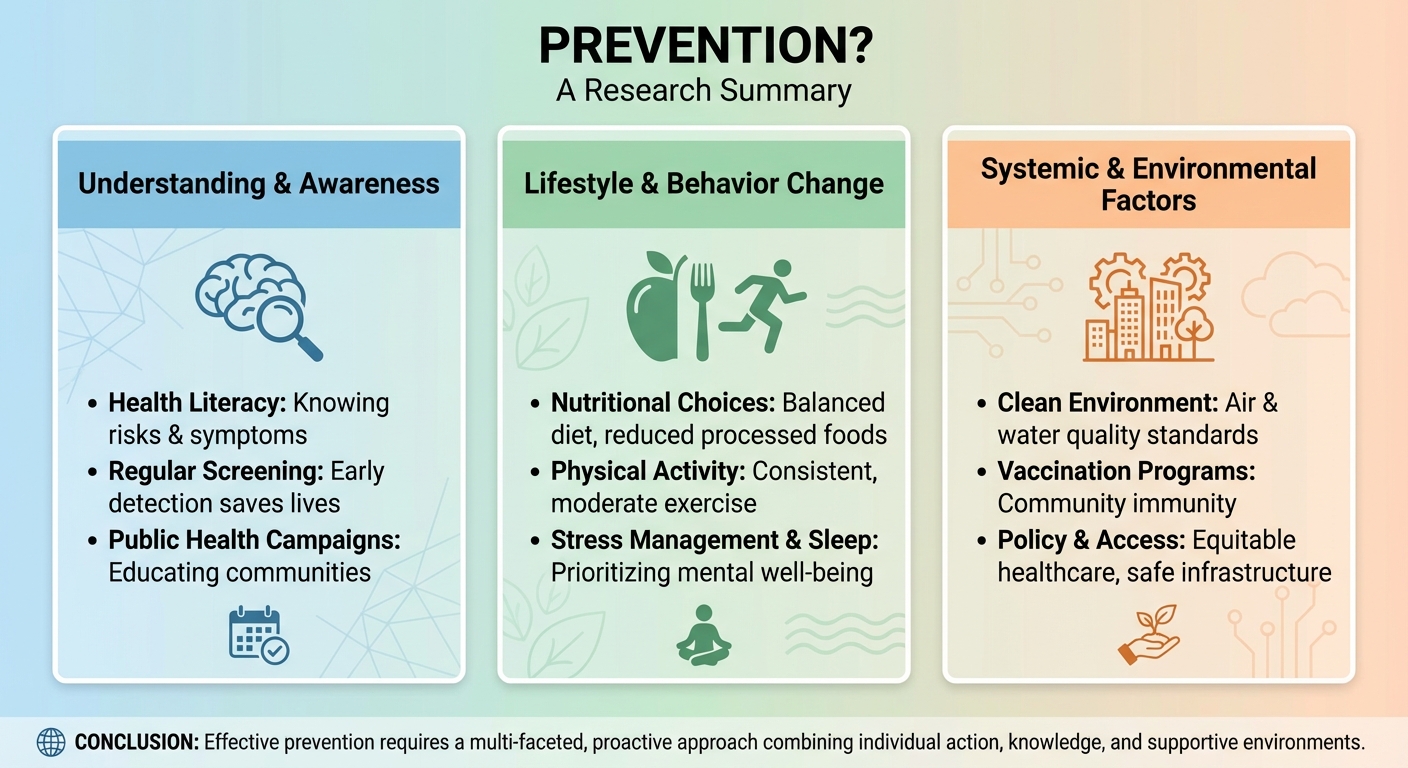
If you already take vitamin C and feel it helps, the modest duration reduction is real, so continuing is reasonable. If you’re deciding whether to start specifically for cold prevention, evidence doesn’t support that expectation. Better cold-prevention strategies include frequent handwashing, adequate sleep, and avoiding close contact with sick individuals.
Summary
Claim: Vitamin C prevents colds.
Verdict: Mostly false. Vitamin C does not prevent colds in the general population. Regular supplementation may reduce cold duration by about 8 percent in adults and 14 percent in children, but this requires taking it before getting sick, not after symptoms start. The exception is people under extreme physical stress, like endurance athletes, who may see reduced cold incidence with supplementation.
For everyday cold prevention, handwashing and adequate sleep are more effective strategies than vitamin C supplementation.