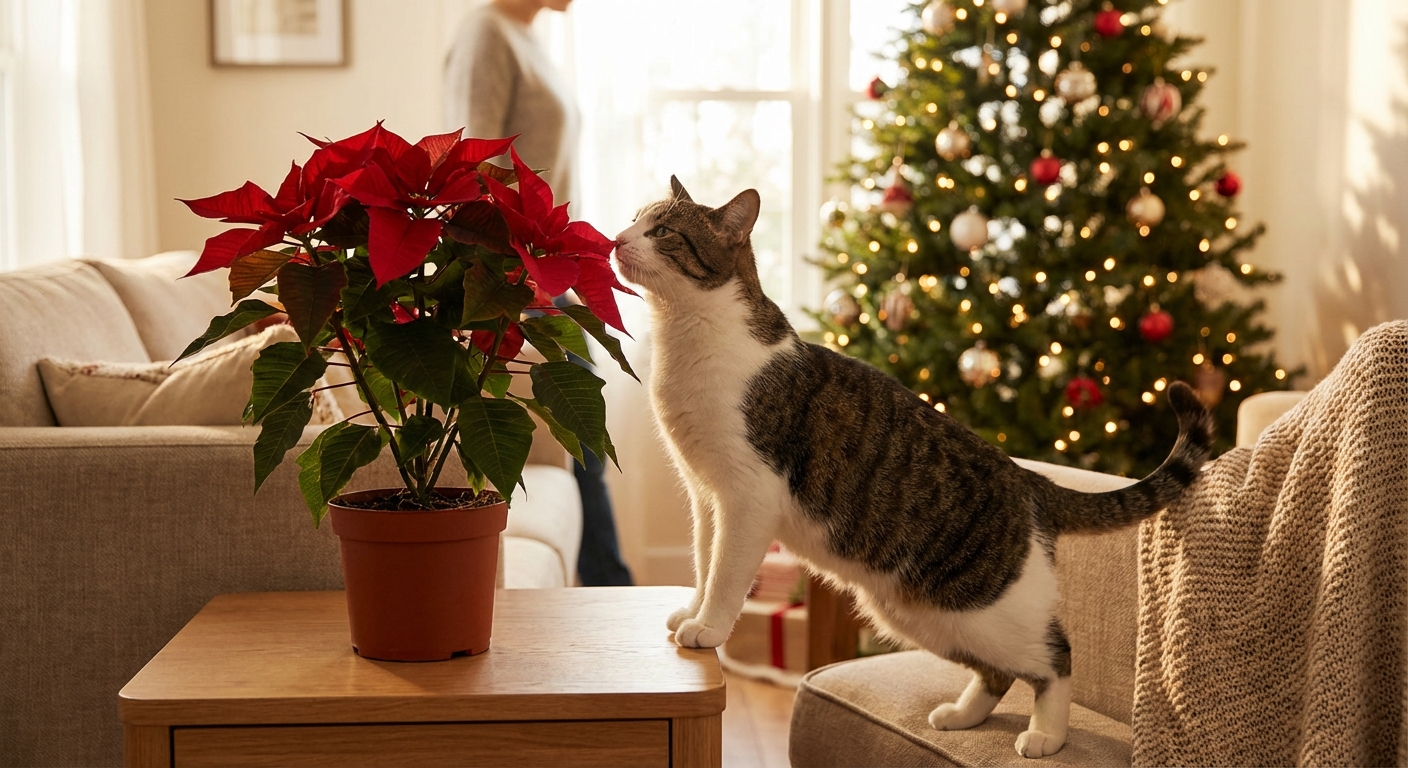
Are poinsettias poisonous to pets? Mildly, but the danger is greatly exaggerated. Poinsettias contain a sap that can irritate the mouth and stomach, potentially causing drooling, vomiting, or diarrhea if a pet eats the leaves. However, serious poisoning is extremely rare. The ASPCA and poison control centers consistently report that while poinsettias are technically toxic, they pose minimal real-world risk to cats and dogs.
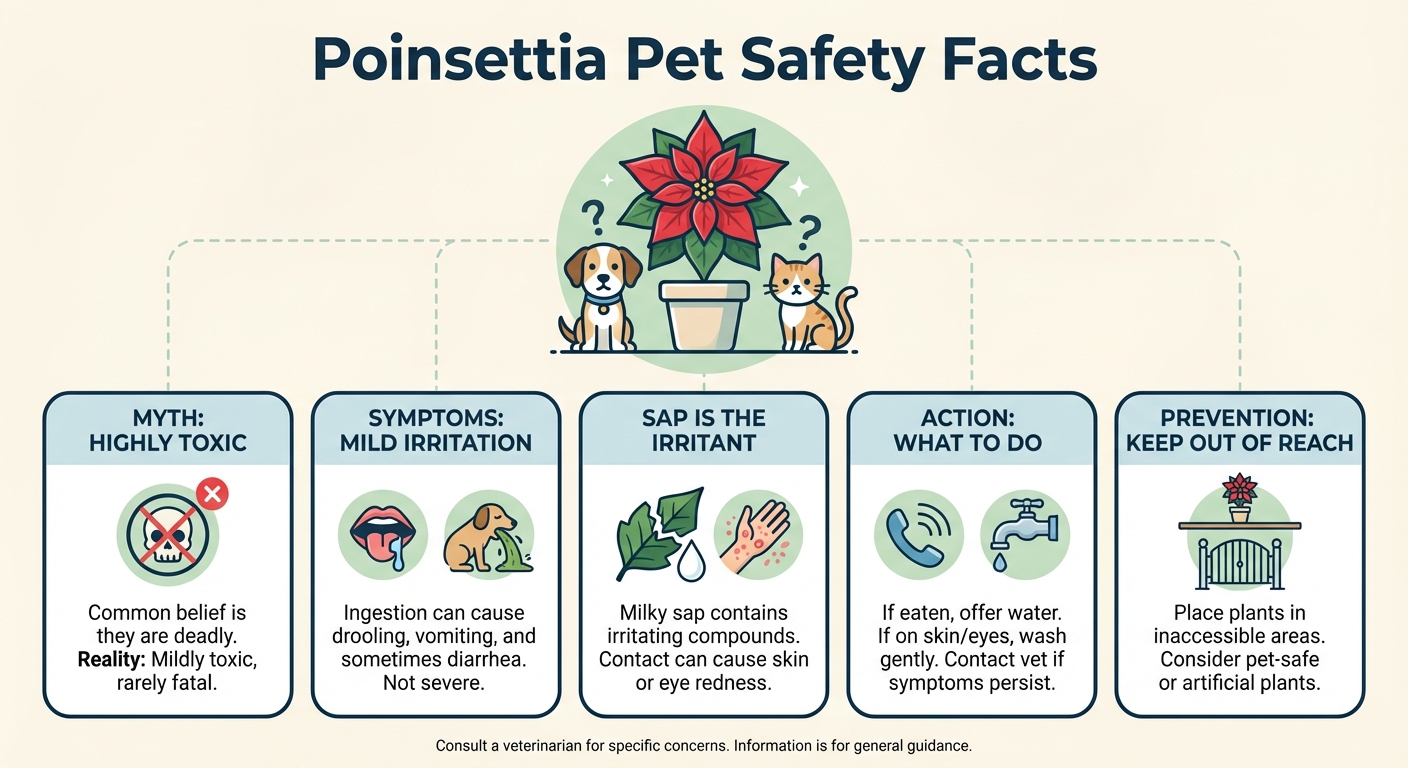
The belief that poinsettias are deadly to pets is one of the most persistent holiday myths. The plant’s reputation for extreme toxicity dates to a 1919 case that was later debunked. While you should still discourage pets from eating your holiday plants, poinsettias are far less dangerous than their reputation suggests.
What the Research Actually Shows
Studies have thoroughly examined poinsettia toxicity. A 1971 study at Ohio State University found that rats fed large quantities of poinsettia showed no ill effects. The American Society for the Prevention of Cruelty to Animals (ASPCA) lists poinsettias as causing only mild symptoms.
Analysis of poison control data supports this. A review of over 22,000 poinsettia exposure cases reported to poison control centers found that more than 96 percent of cases required no medical treatment. Among the minority who did experience symptoms, effects were mild and self-limiting.
The sap contains chemicals called diterpenoid euphorbol esters, which can irritate tissue on contact. This explains why pets might drool or paw at their mouths after chewing poinsettia leaves. The irritation is uncomfortable but not dangerous.
Symptoms If Your Pet Eats Poinsettia
If your cat or dog chews on poinsettia leaves, you might notice drooling or lip-licking as the sap irritates their mouth. Some pets vomit or have mild diarrhea as the digestive system responds to the irritant. Skin contact with the sap can occasionally cause redness or irritation.
These symptoms typically resolve on their own within a few hours. Rinsing your pet’s mouth with water can help relieve oral irritation. Offer water to drink. If vomiting occurs, withhold food for a few hours, then offer a bland meal.
Severe symptoms would be unusual but warrant veterinary attention. If your pet seems lethargic, refuses to eat or drink, has persistent vomiting, or shows any concerning behavior change, call your vet or an animal poison control hotline.
The Origin of the Deadly Poinsettia Myth
The myth traces to a 1919 report of a child’s death allegedly caused by eating poinsettia leaves. The case was never confirmed and is now considered debunked, but the story spread widely and became entrenched in popular belief.
The poinsettia’s dramatic appearance may contribute to its fearsome reputation. Those bright red leaves (actually modified leaves called bracts) look almost too vivid to be safe. Add in the milky sap that oozes when stems are cut, and the plant seems suspicious.
Plant and poison experts have tried for decades to correct this myth with limited success. Holiday warnings about poinsettias persist in media coverage year after year, often overstating the risk while ignoring genuinely dangerous plants.
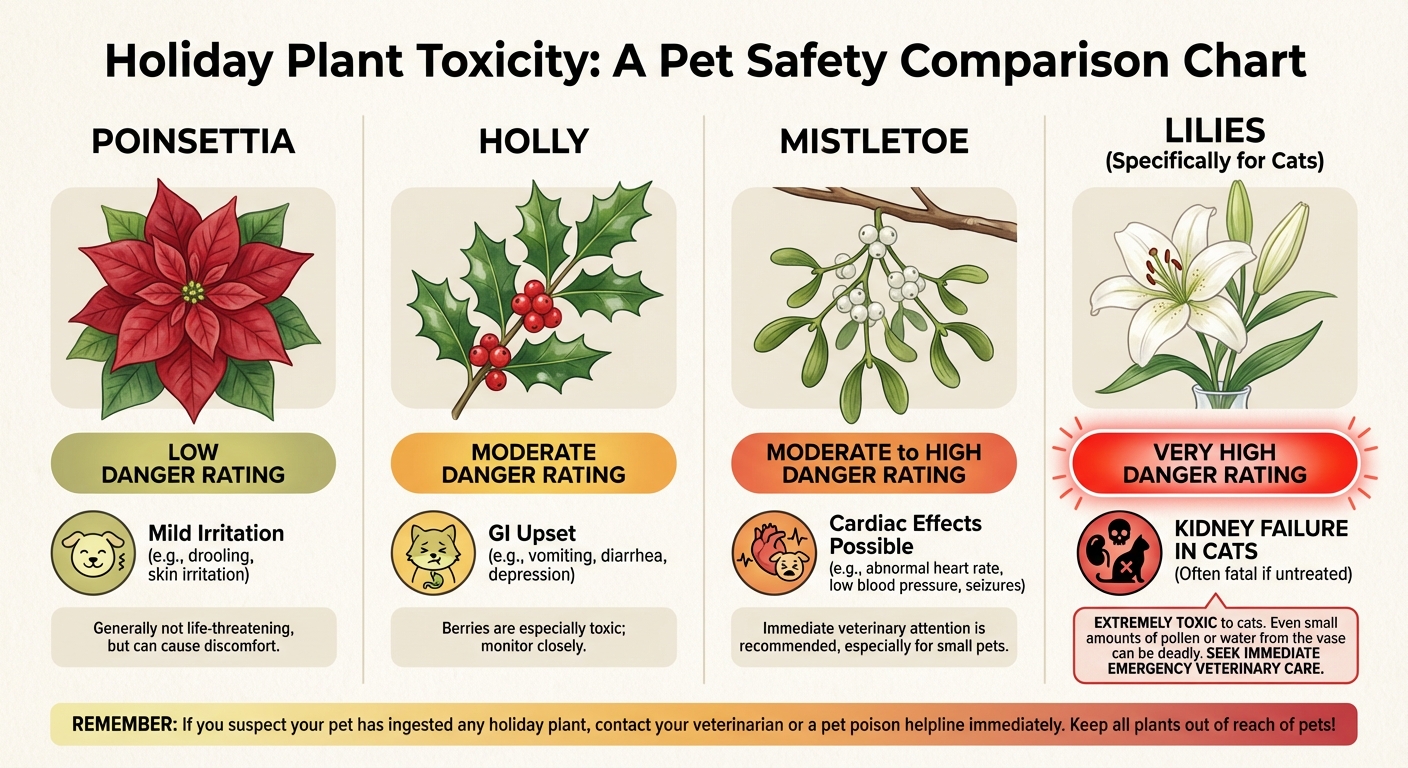
Holiday Plants That Are Actually Dangerous
While poinsettias get the scary reputation, other common holiday plants pose greater risks to pets.
Lilies are extremely toxic to cats. Even small exposures to certain lily species (Easter lilies, Tiger lilies, Asiatic lilies, and others) can cause kidney failure in cats within days. This is a genuine emergency. If you have cats, avoid true lilies entirely.
Mistletoe contains compounds that can cause significant vomiting, diarrhea, difficulty breathing, and even cardiovascular problems in large amounts. European mistletoe is more toxic than American varieties, but both warrant caution.
Holly berries can cause severe vomiting, diarrhea, and lethargy if eaten in quantity. The spiny leaves are also irritating if chewed. Unlike poinsettias, holly ingestion more commonly leads to veterinary visits.
Amaryllis bulbs contain lycorine, which causes vomiting, diarrhea, abdominal pain, and potential tremors. The bulb is more toxic than the flowers or leaves.
Practical Holiday Plant Safety
Keep all holiday plants out of easy pet reach, especially if you have young, curious animals that chew on everything. Even non-toxic plants can cause digestive upset when eaten.
Place poinsettias on high shelves or in rooms pets don’t access. If your cat is determined to reach any elevated surface, consider keeping plants in a closed room during the holiday season.
If your pet does eat a holiday plant and you’re unsure of its toxicity, call the ASPCA Animal Poison Control Center (888-426-4435) or the Pet Poison Helpline (855-764-7661). Have the plant name ready, estimate how much was eaten, and note your pet’s size and any symptoms.
Summary
Claim: Poinsettias are deadly to pets.
Verdict: Mostly false. Poinsettias are mildly toxic and can cause drooling, vomiting, or diarrhea if eaten, but serious harm is extremely rare. More than 96 percent of poinsettia exposures require no treatment. Other holiday plants like lilies, mistletoe, and holly pose greater genuine risks.
Keep poinsettias out of reach as a precaution, but don’t panic if your pet takes a nibble. Save your serious plant safety concern for lilies if you have cats.