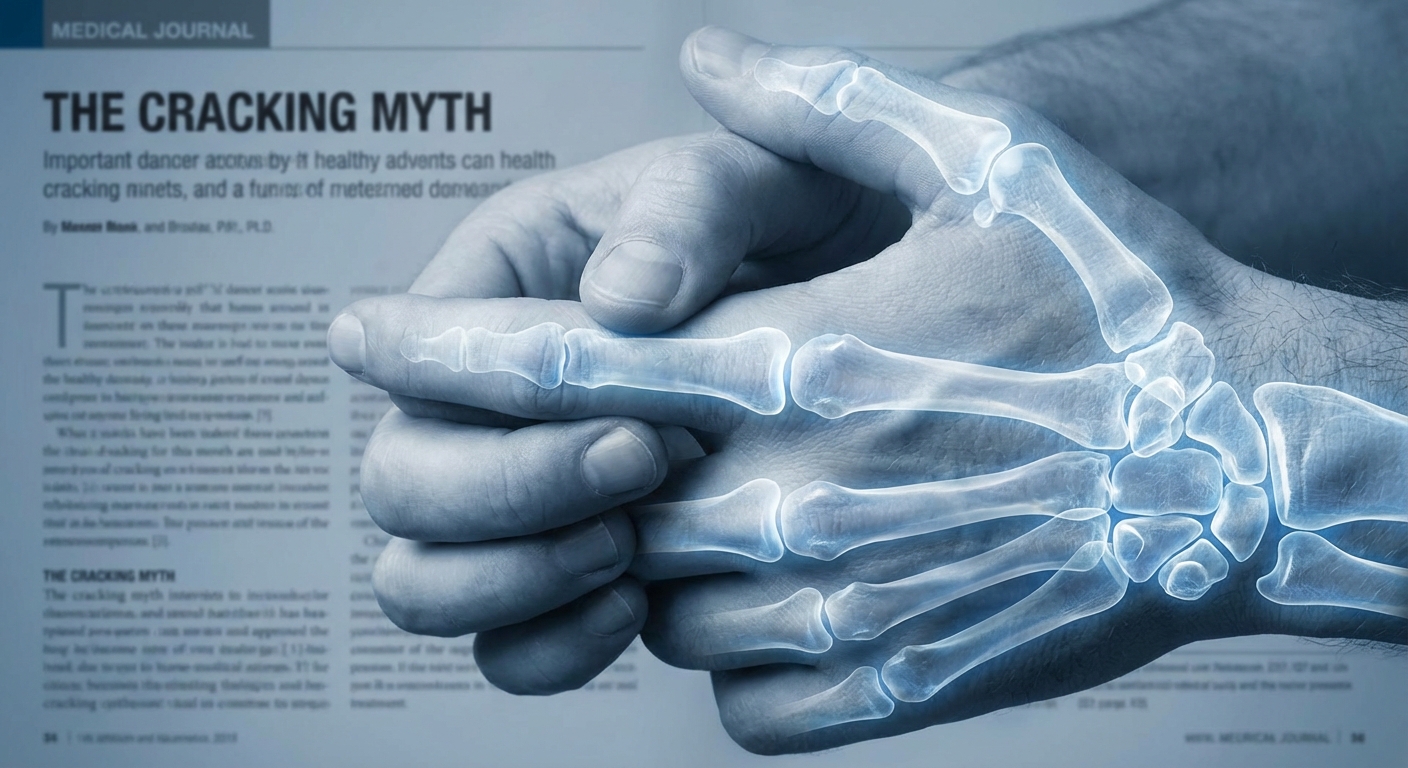
Does cracking your knuckles cause arthritis? No. Despite what parents have warned for generations, research consistently shows no connection between knuckle cracking and arthritis. Multiple studies comparing lifelong knuckle crackers to non-crackers have found no difference in arthritis rates. The pop sound is just gas bubbles forming or collapsing in the fluid that lubricates your joints, not damage occurring.
This is one of the most persistent medical myths. The satisfying pop sounds alarming, and arthritis is a real condition people fear. But the evidence is clear: crack away if you enjoy it.
What Actually Happens When You Crack Your Knuckles
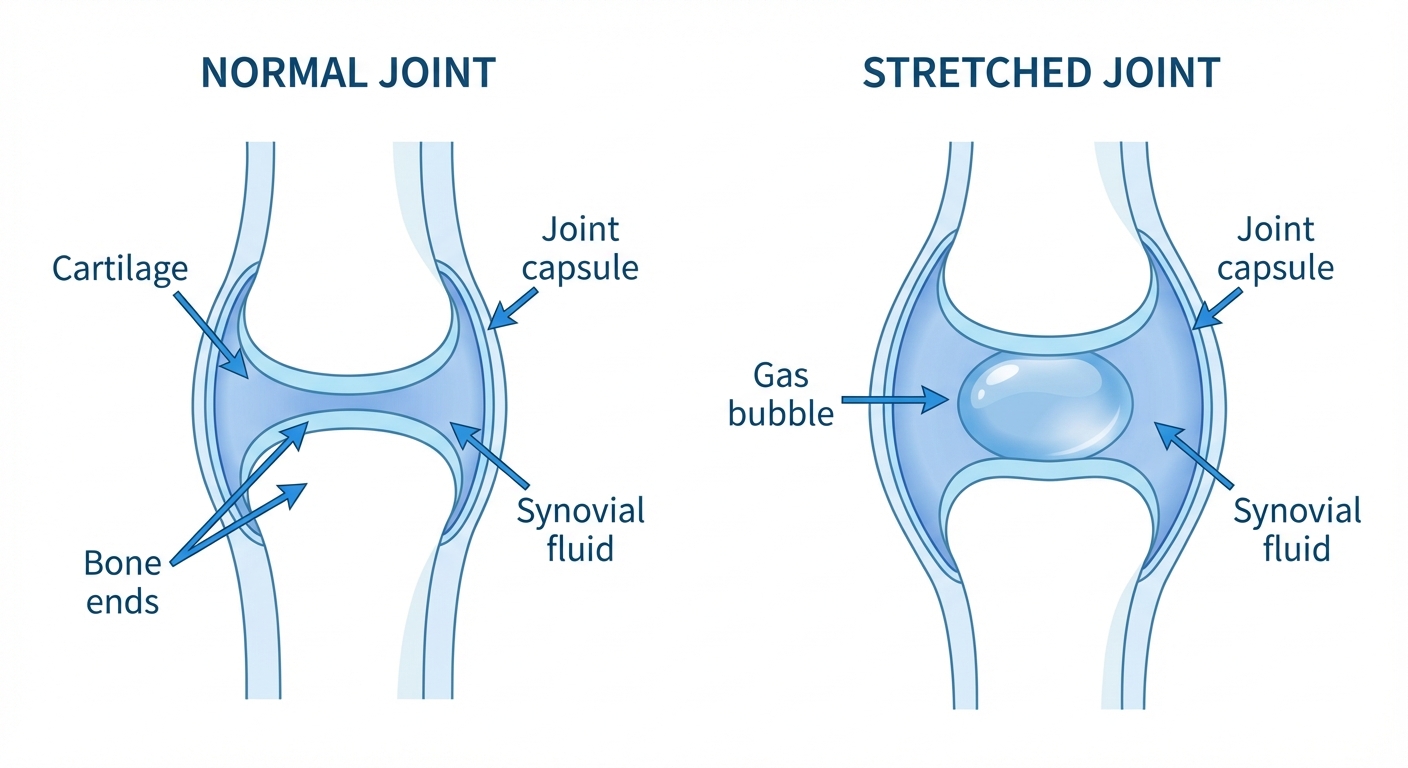
The popping sound comes from your joint fluid, called synovial fluid, which lubricates joints like oil lubricates an engine. This fluid contains dissolved gases, primarily carbon dioxide.
When you stretch or bend a joint beyond its normal range, you create negative pressure inside the joint capsule. This reduced pressure allows gas to rapidly form bubbles, a process called cavitation. The bubble formation or collapse produces that distinctive popping sound.
An MRI study published in PLOS ONE in 2015 captured this in real time, showing a bright flash in the joint space at the moment of cracking. The flash was the gas bubble forming. After cracking, the gas takes about 20 minutes to redissolve into the fluid, which is why you can’t immediately crack the same joint again.
The process involves no cartilage damage, bone contact, or tissue destruction. It’s simply gas physics happening in fluid.
The Research Evidence
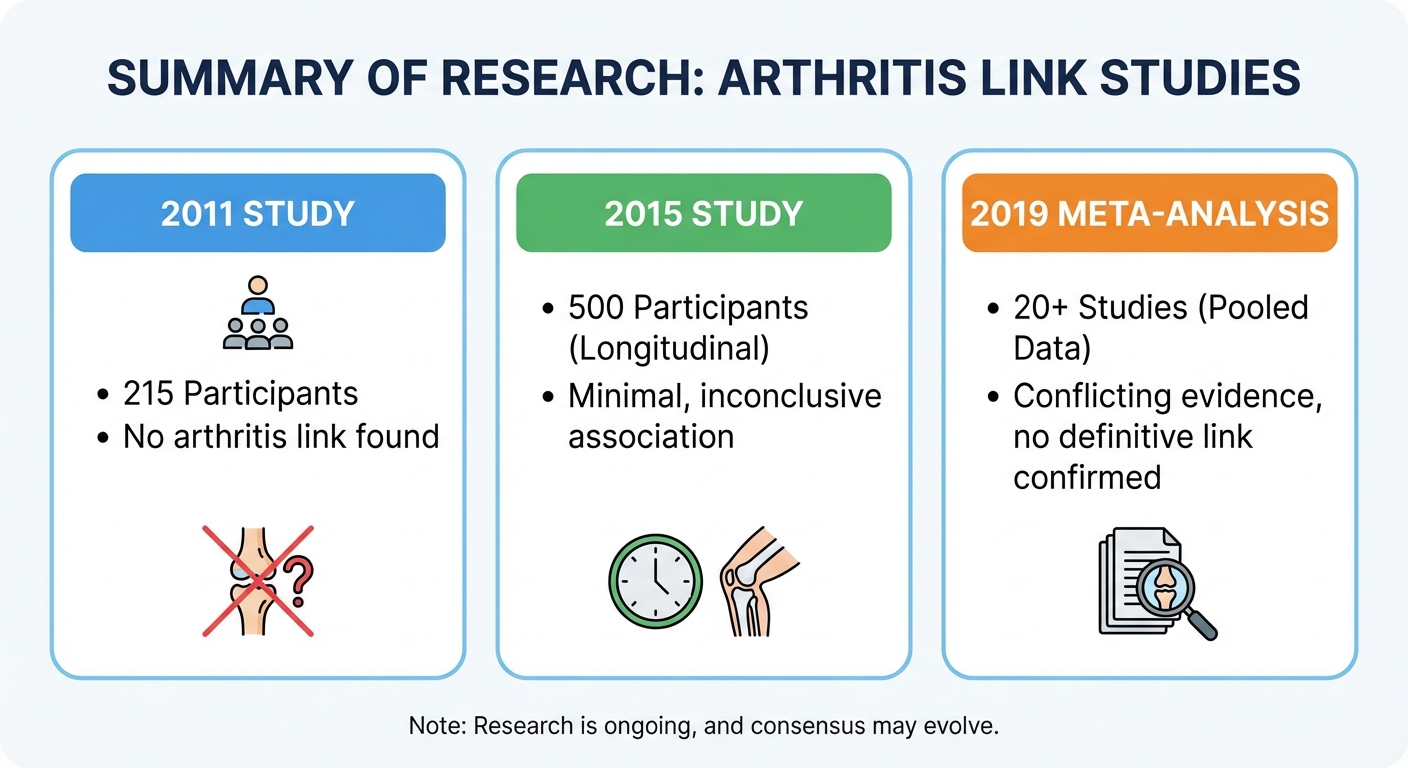
Several studies have directly examined whether habitual knuckle cracking leads to arthritis.
A 2011 study published in the Journal of the American Board of Family Medicine examined 215 people aged 50-89, comparing habitual knuckle crackers to non-crackers. The researchers found no difference in arthritis rates between the groups. Knuckle crackers were no more likely to have osteoarthritis in their hands.
An older study from 1990 in the Annals of the Rheumatic Diseases looked at 300 people and reached the same conclusion: no association between knuckle cracking and arthritis. Interestingly, this study did find a slight association between cracking and hand swelling, but not arthritis itself.
Perhaps most famously, physician Donald Unger cracked the knuckles on his left hand at least twice daily for 60 years while leaving his right hand alone as a control. In 1998, he published his findings: neither hand developed arthritis. He won an Ig Nobel Prize for this dedication to self-experimentation.
What Does Cause Arthritis
Osteoarthritis, the type most associated with knuckle cracking fears, develops from actual joint damage and wear. Risk factors include:
Age is the primary factor. Cartilage naturally degrades over decades of use. Most people over 60 show some osteoarthritis on X-rays, though not all experience symptoms.
Joint injury accelerates arthritis in affected joints. A broken finger, dislocated joint, or other trauma can lead to earlier osteoarthritis in that specific joint.
Obesity increases arthritis risk, particularly in weight-bearing joints like knees and hips. The extra load accelerates cartilage breakdown.
Genetics plays a significant role. If your parents had arthritis, you’re more likely to develop it. Some people’s cartilage is simply more prone to degradation.
Repetitive occupational stress affects specific joints. Factory workers, athletes, and others who repeatedly stress particular joints show higher arthritis rates in those joints.
Rheumatoid arthritis, an autoimmune condition, has entirely different causes unrelated to joint use or cracking.
Potential Downsides of Knuckle Cracking
While knuckle cracking doesn’t cause arthritis, it may have minor effects worth knowing.
Some studies suggest habitual crackers may have slightly reduced grip strength, though the effect is small and not consistently found across all research.
The 1990 study noted an association with hand swelling, though not cartilage damage or arthritis. The mechanism isn’t clear, and this finding hasn’t been consistently replicated.
Some people experience pain when cracking joints if they’re already inflamed from injury or existing arthritis. In these cases, the cracking doesn’t cause the problem but may aggravate symptoms.
Socially, many people find knuckle cracking annoying. This may be the most significant consequence for habitual crackers.
Summary
Claim: Cracking your knuckles causes arthritis.
Verdict: False. Multiple studies show no connection between knuckle cracking and arthritis. The popping sound comes from gas bubbles forming in joint fluid, not from any damaging process. A doctor who cracked only one hand’s knuckles for 60 years found no difference in arthritis development.
Arthritis is caused by age, genetics, injury, obesity, and repetitive occupational stress, not by recreational joint popping. If you enjoy cracking your knuckles, the evidence says you can continue without worrying about joint damage.