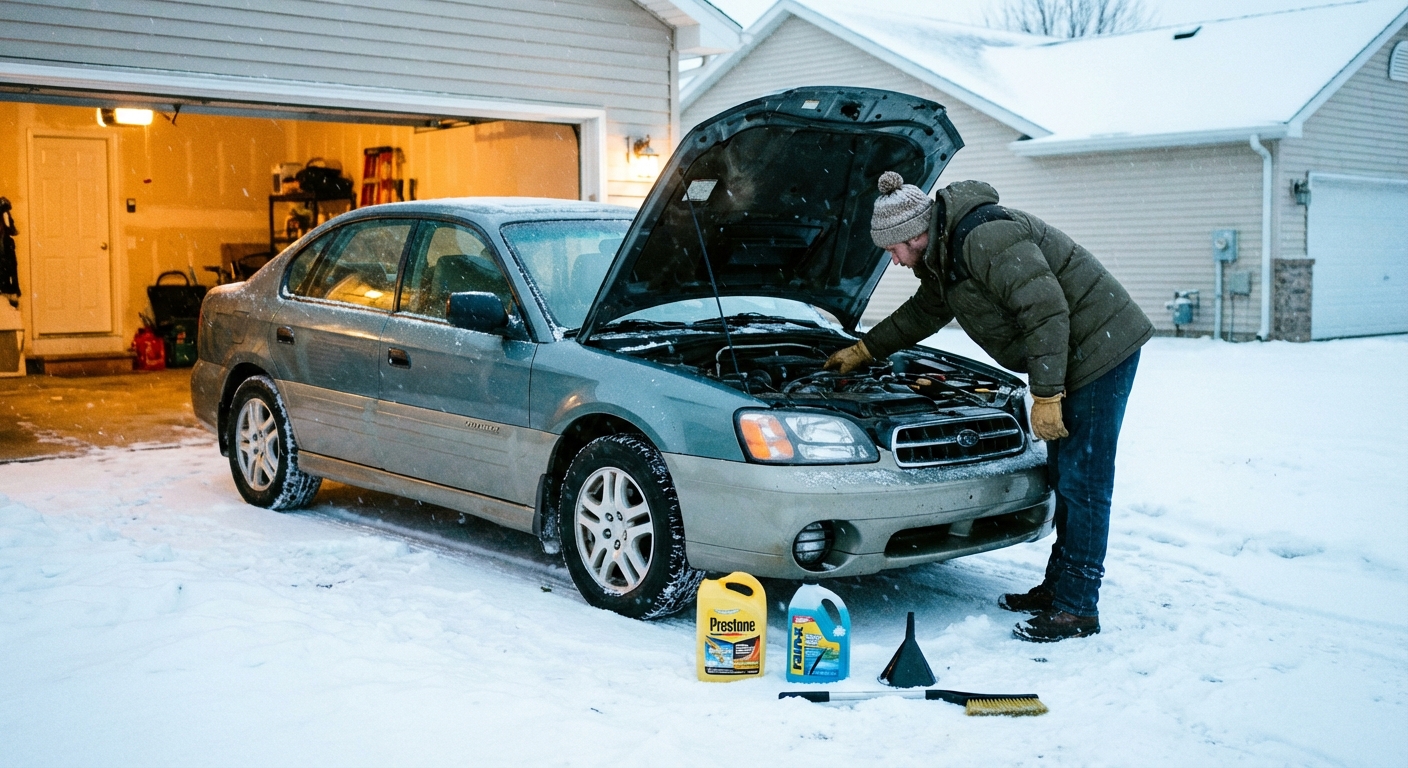
How do you winterize your car? Winterizing your car means preparing its critical systems for cold weather: checking antifreeze levels and mixture, inspecting or replacing the battery, switching to winter tires or verifying all-season tire tread depth, replacing wiper blades, and stocking emergency supplies. Most of these tasks take an afternoon and can prevent breakdowns, accidents, and expensive repairs when temperatures drop.
Cold weather stresses your vehicle in ways that summer driving never does. Engine oil thickens, batteries lose power, tire pressure drops, and road salt attacks your undercarriage. A few hours of preparation before the first freeze can mean the difference between reliable transportation and being stranded on the side of a frozen highway. Here’s exactly what to do, step by step.
Check Your Antifreeze and Cooling System
Your engine’s cooling system does double duty in winter, preventing both overheating and freezing. Antifreeze, also called coolant, lowers the freezing point of the water in your radiator so it won’t turn to ice and crack your engine block. This is the single most important winter preparation you can make.
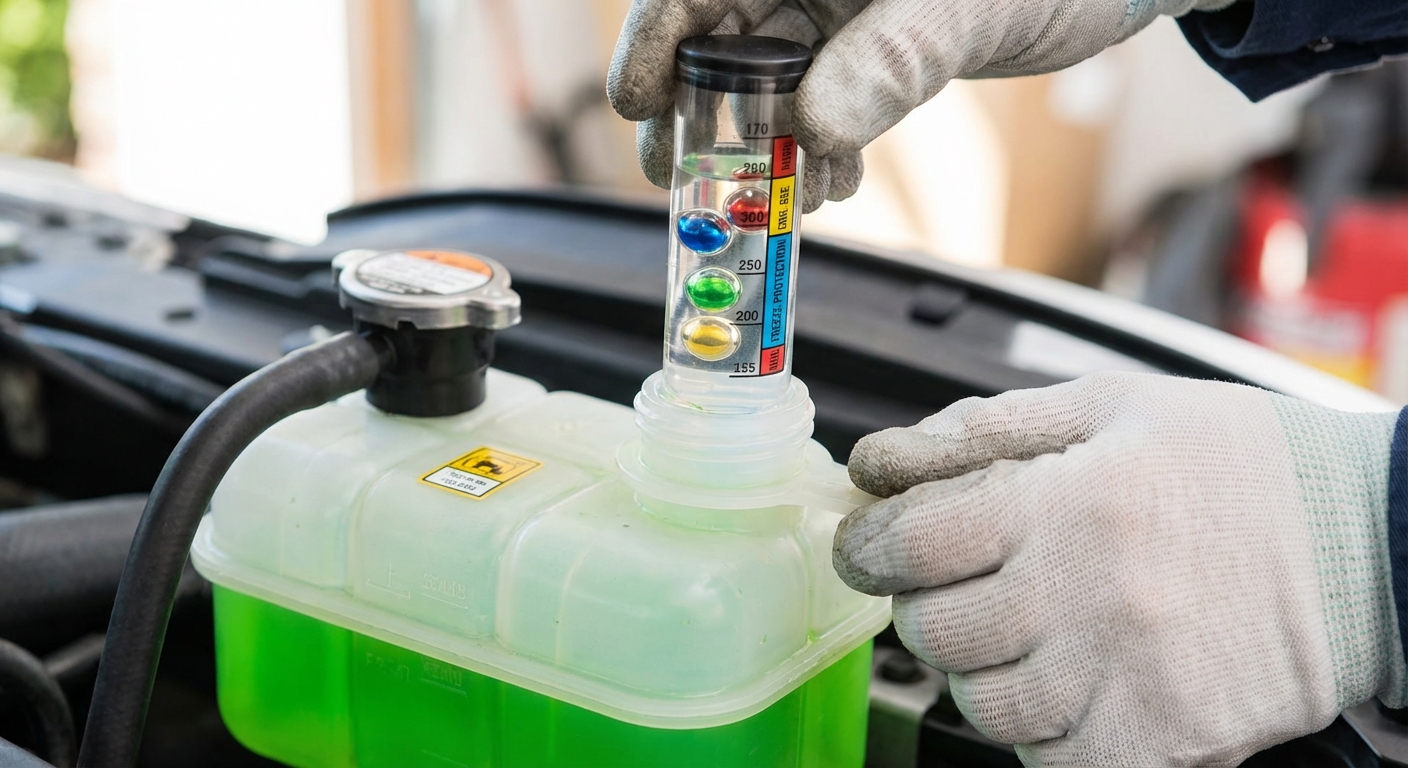
Check your antifreeze level by looking at the overflow reservoir when the engine is cold. The fluid should be between the minimum and maximum marks. If it’s low, you’ll need to add more, but first verify that your antifreeze mixture is correct. A 50/50 mix of antifreeze and water protects to about minus 34 degrees Fahrenheit, which is sufficient for most climates.
You can test your antifreeze mixture with an inexpensive antifreeze tester from any auto parts store. These use floating balls or a refractometer to indicate the freeze protection level. If your mixture is too weak or the antifreeze is more than two years old, flush the system and refill with fresh coolant. Old antifreeze loses its corrosion protection and can damage your radiator, water pump, and heater core.
Inspect and Test Your Battery
Cold weather is brutal on car batteries. At 32 degrees Fahrenheit, a battery loses about 35 percent of its power. At zero degrees, it loses 60 percent. Meanwhile, cold oil makes your engine harder to turn over, demanding more power from the battery at exactly the moment it has less to give. This is why batteries that worked fine all summer suddenly fail on the first cold morning.
Have your battery tested at any auto parts store, which typically offers this service for free. The test measures cold cranking amps, the power available for starting, and determines whether your battery can still deliver its rated output. Most batteries last three to five years, so if yours is approaching that age, consider replacing it before winter rather than after a failure leaves you stranded.
Inspect the battery terminals for corrosion, which appears as white or greenish powder around the connections. Corrosion increases electrical resistance and can prevent your car from starting. Clean corroded terminals with a wire brush and a mixture of baking soda and water, then apply terminal protector spray to prevent future buildup. Make sure the battery is securely mounted, as vibration can damage internal components.
Evaluate Your Tires
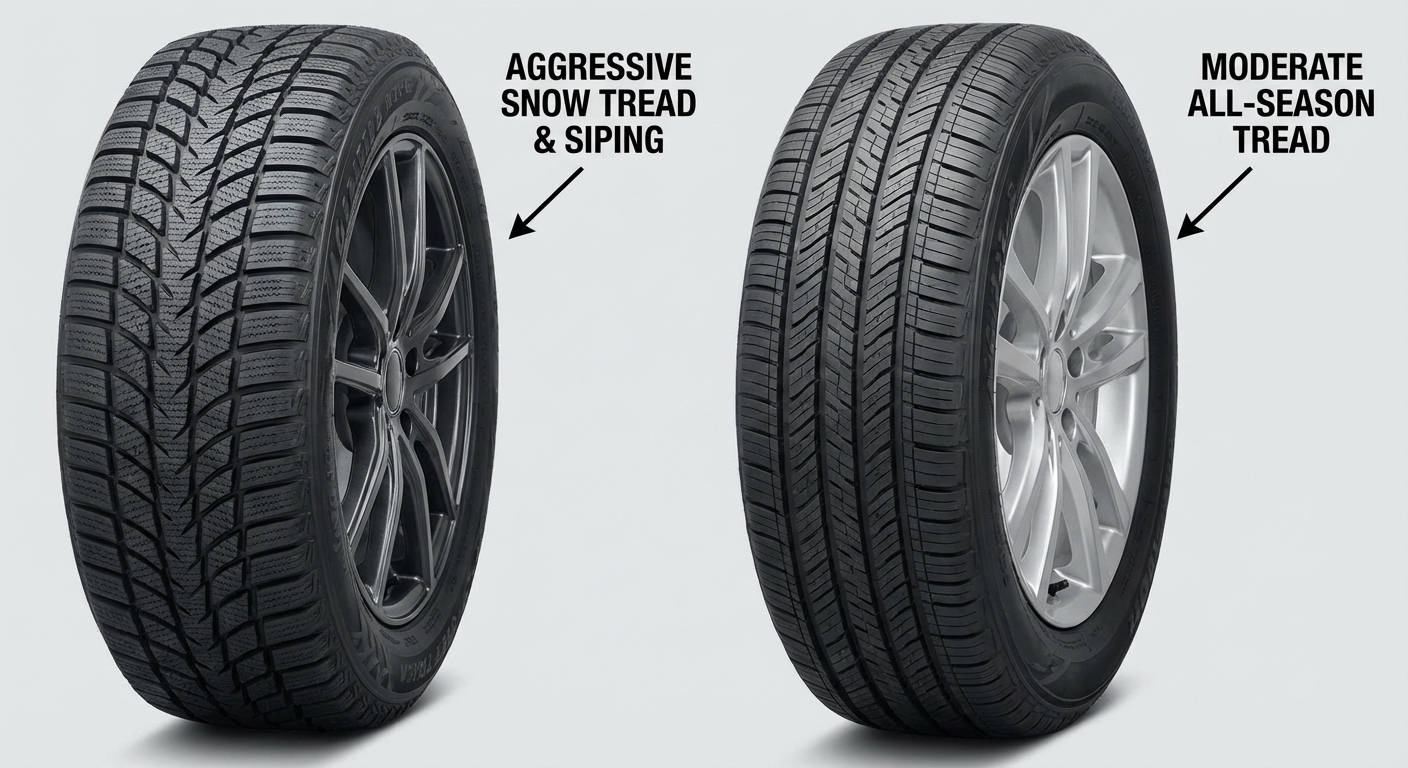
Tires are your only connection to the road, and their importance multiplies on slippery winter surfaces. You have two main options: dedicated winter tires or all-season tires with adequate tread depth. The choice depends on your climate and driving conditions.
Winter tires use rubber compounds that stay flexible in cold temperatures and tread patterns designed to grip snow and ice. Below 45 degrees Fahrenheit, summer tires and even many all-season tires become hard and lose traction. If you regularly drive in snow or experience extended periods below freezing, winter tires are a worthwhile investment. They should be installed on all four wheels for balanced handling.
If you’re keeping your all-season tires, verify they have sufficient tread depth. The legal minimum is 2/32 of an inch, but tires lose significant winter traction before reaching that point. Insert a quarter into the tread with Washington’s head facing down. If you can see the top of his head, your tread is at 4/32 or less and you should consider replacement. The penny test using Lincoln’s head measures 2/32, the legal minimum.
Replace Wiper Blades and Fluid
Winter driving demands clear visibility, but ice, snow, and road spray constantly attack your windshield. Your wiper blades and washer fluid need to be ready for these conditions.
Replace wiper blades if they streak, skip, or leave areas unwiped. Most blades should be replaced every six to twelve months. Consider winter-specific wiper blades, which have a rubber boot covering the blade mechanism to prevent ice buildup. These cost a few dollars more but maintain flexibility when standard blades freeze solid.
Switch to winter windshield washer fluid rated for temperatures below what you expect to encounter. Summer washer fluid can freeze in the reservoir and lines, leaving you unable to clear road spray exactly when visibility matters most. Winter formulas typically protect to minus 20 or minus 30 degrees Fahrenheit. Fill the reservoir completely and keep an extra jug in your garage.
Check Your Heating and Defrost Systems
A functioning heater isn’t just about comfort. Your defroster depends on the heating system to clear your windshield, and driving with an obscured windshield is both dangerous and illegal. Test your heating system before cold weather arrives so you have time to address problems.
Start your car and let it warm up, then test all heater settings and fan speeds. Air should blow hot within a few minutes of the engine reaching operating temperature. If the heater blows lukewarm air, you might have low coolant, a stuck thermostat, a clogged heater core, or air trapped in the cooling system.
Test your front and rear defrosters. The front defroster should clear the windshield within a few minutes using hot air. The rear defroster uses electric heating elements embedded in the glass and should show visible clearing lines. If your rear defroster doesn’t work, check the fuse first, then inspect the electrical connections at the glass edges.
Prepare an Emergency Kit
Even a well-maintained car can encounter problems, and winter adds the risk of being stranded in dangerous cold. An emergency kit can keep you safe while waiting for help and might even get you moving again.
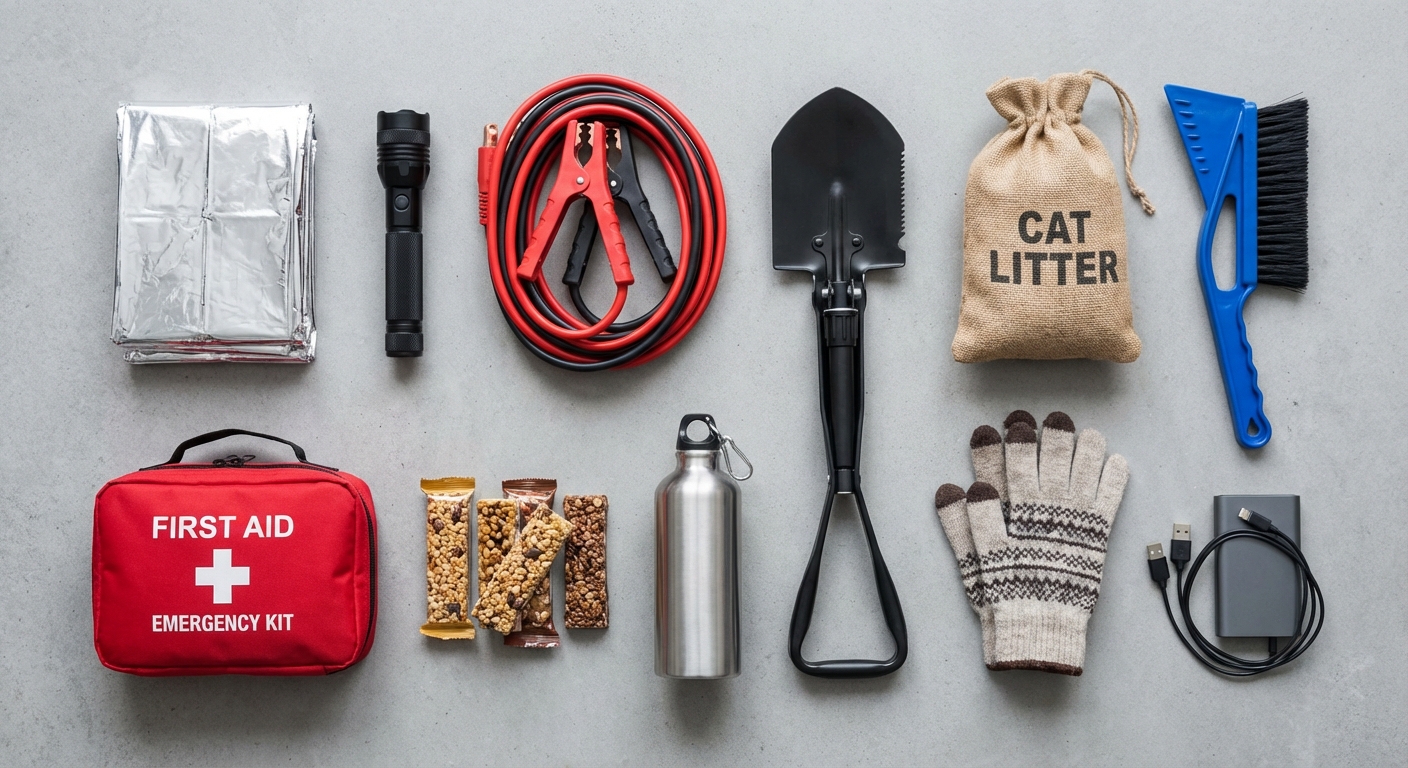
Your winter emergency kit should include a blanket or sleeping bag, extra warm clothing, non-perishable snacks and water, a flashlight with extra batteries, a first aid kit, and a fully charged portable phone charger. Add flares or reflective triangles for visibility if you’re stopped on the roadside.
For getting unstuck, pack a small shovel, bag of sand or cat litter for traction, tow strap, and jumper cables. An ice scraper and snow brush are essential for clearing your car after a storm. Keep all these items in your trunk where they’re accessible even if you can’t open other doors.
Additional Winter Maintenance Tasks
Several other maintenance items deserve attention before winter. Check your oil and consider whether a thinner weight is appropriate for your climate. Modern synthetic oils flow better in cold temperatures than conventional oils. Consult your owner’s manual for cold-weather oil recommendations.
Inspect your belts and hoses for cracks, fraying, or soft spots. Cold weather makes rubber more brittle and likely to fail. A broken serpentine belt will leave you stranded, and a burst radiator hose can destroy your engine. Replace any components that show wear.
Clean your car thoroughly, including the undercarriage, before winter salt and chemicals start accumulating. Apply wax for paint protection. During winter, wash your car regularly to remove salt, especially from wheel wells and undercarriage areas where corrosion starts.
Summary
Winterizing your car protects both your safety and your wallet. Check antifreeze for proper freeze protection and condition. Test your battery and clean corroded terminals. Verify tire tread depth or switch to winter tires. Replace worn wiper blades and switch to winter washer fluid. Test your heater and defroster systems.
Assemble an emergency kit with blankets, food, water, and tools for getting unstuck. Complete these tasks before the first freeze and you’ll drive confidently all winter, knowing your car is ready for whatever the weather brings.