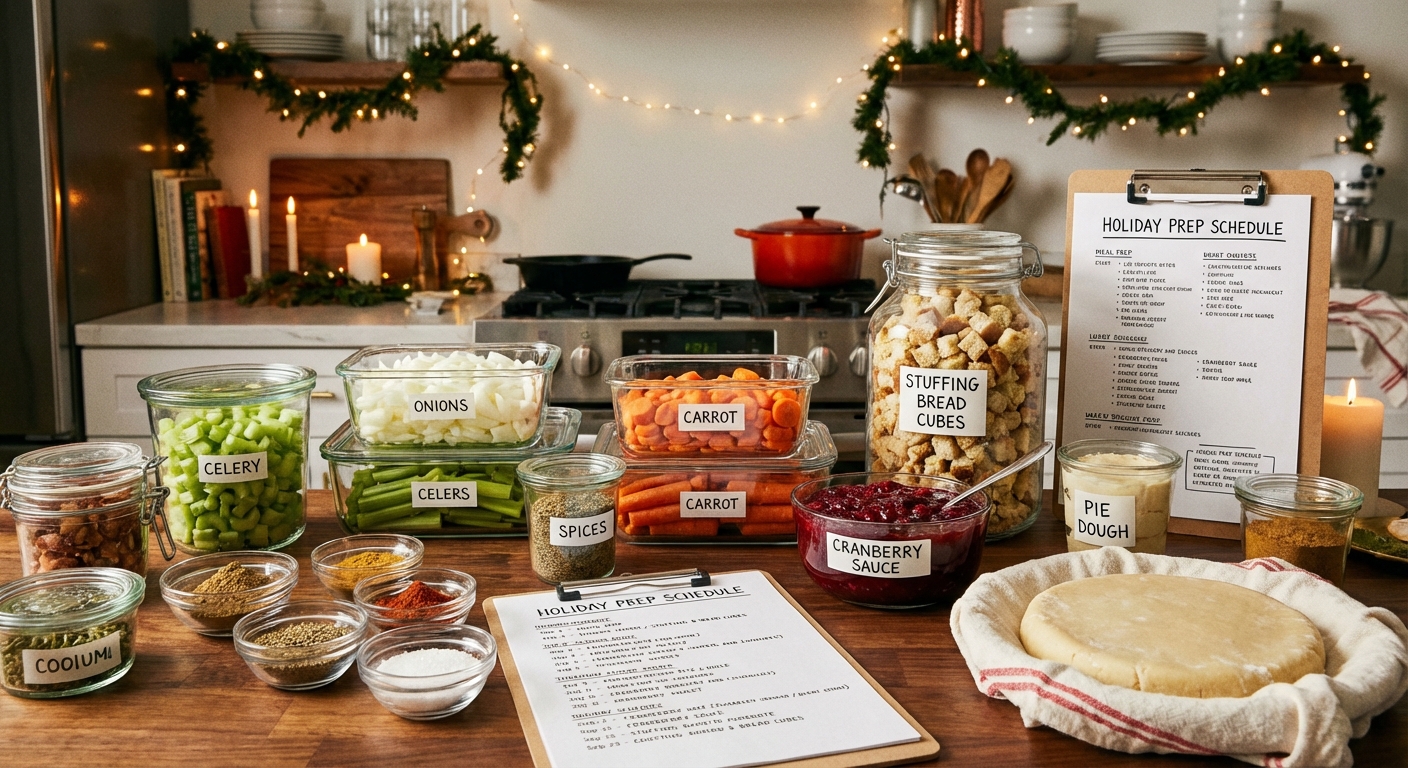
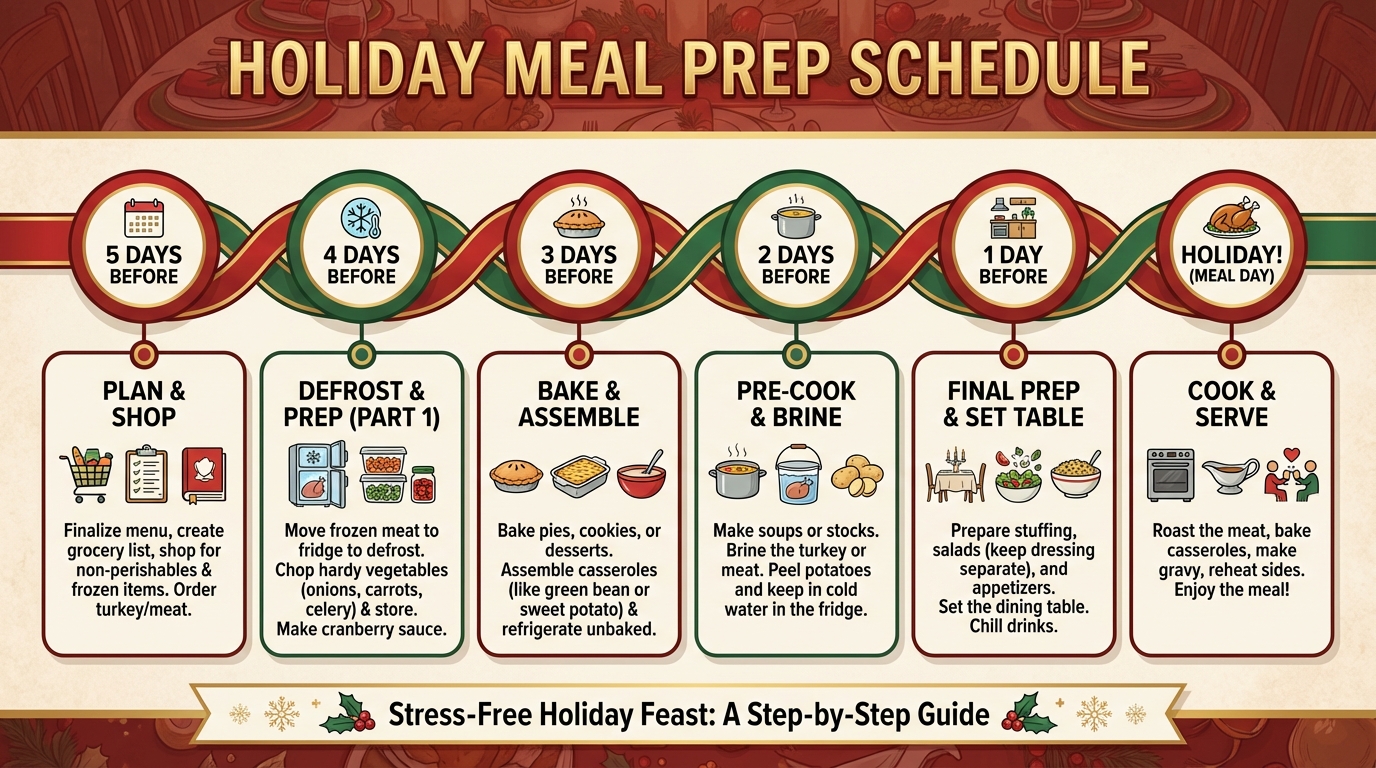
How do you meal prep for holiday meals? Break your menu into stages: three to five days before, prep shelf-stable ingredients like chopped vegetables, bread cubes for stuffing, and pie dough. Two days before, make dishes that reheat well, such as cranberry sauce, casseroles, and desserts. One day before, prep the main protein and set the table. Reserve only finishing touches and reheating for the actual day. This staged approach prevents the chaos of cooking everything at once.
The secret to stress-free holiday hosting isn’t having more skill or better equipment. It’s planning. With proper meal prep, you’ll spend the holiday enjoying guests instead of frantically stirring pots.
Assess Your Menu and Create a Timeline
Start by listing every dish you plan to serve. For each item, determine whether it can be made entirely ahead, partially prepped ahead, or must be made fresh. This analysis becomes the foundation of your prep schedule.
Dishes that can be made 2-3 days ahead include cranberry sauce, pie (most pies reheat well), dinner rolls, and many casseroles. Dishes requiring day-of cooking include the main protein, mashed potatoes (though these can be mostly prepped ahead), and any dish that needs to be served immediately from the oven.
Create a reverse timeline starting from your meal time and working backward. If dinner is at 3 PM on Thursday, map out what needs to happen each preceding day. Include not just cooking but also shopping, cleaning, and table setting.
What to Prep 3-5 Days Ahead
The most stable prep tasks should happen earliest, leaving you more flexibility as the event approaches.
Dry bread for stuffing. Cut bread into cubes and leave it out uncovered, or toast lightly in a low oven. Store in a paper bag or loosely covered container. Dried bread absorbs flavor better and creates better texture.
Make pie dough. Most pie doughs refrigerate well for several days and actually benefit from resting. Wrap tightly in plastic wrap. Alternatively, make and freeze doughs weeks ahead.
Prep aromatics. Chop onions, celery, and garlic. Store in airtight containers in the refrigerator. These keep 3-4 days and save significant time on cooking day.
Toast and chop nuts. Toasted nuts for salads, desserts, or casserole toppings stay crisp for days in an airtight container at room temperature.
What to Prep 2 Days Before
Two days out, focus on dishes that are fully cooked and reheat well or improve with time.
Cranberry sauce. Fresh cranberry sauce tastes better after a day or two of refrigeration as flavors meld. Make it and forget it.
Bake pies. Most fruit and nut pies can be baked two days ahead and stored at room temperature. Cream pies should be made one day ahead and refrigerated.
Prepare casserole bases. Assemble green bean casserole, sweet potato casserole, or dressing without the final toppings. Refrigerate covered. Add crunchy toppings before baking on the day.
Make gravy base. If you’re not making gravy from pan drippings, prepare stock-based gravy now. You can also make a roux-based gravy and thin with pan drippings later.
What to Prep 1 Day Before
The day before focuses on the main protein and tasks that require freshness but not last-minute timing.
Prep the turkey or roast. Dry-brine your bird by salting and refrigerating uncovered overnight for crispy skin. Prepare any compound butter or seasoning rub. If using a wet brine, this process often starts 24-48 hours ahead.
Make mashed potato base. Peel and cut potatoes, storing them submerged in cold water overnight to prevent browning. Some cooks fully prepare mashed potatoes and reheat, but freshly mashed taste best.
Prepare salads (minus dressing). Wash and dry greens, prep vegetables, make dressing separately. Assemble just before serving.
Set the table. This task takes longer than expected and can be done entirely the day before. Iron napkins, polish silverware, arrange centerpieces.
Clear refrigerator space. Remove anything unnecessary to make room for the dishes you’ll store tonight and need to reheat tomorrow.
Day-Of Cooking Strategy
With proper prep, the day itself focuses on reheating, roasting your main protein, and final assembly.
Morning: Remove prepared dishes from refrigerator to take the chill off before reheating. Start your turkey or roast according to its time requirements. Make coffee for yourself.
Mid-day: Begin reheating casseroles timed to finish when the main course rests. Prepare anything requiring last-minute cooking: rolls, mashed potatoes, sautéed vegetables.
Pre-meal: While the roast rests (crucial for juicy meat), finish gravy with pan drippings, dress the salad, add final casserole toppings, and plate appetizers.
The key insight: When your main protein comes out of the oven, it needs to rest 20-30 minutes before carving. Use this oven-free time to bake rolls, crisp casserole toppings, and bring everything to serving temperature.
Storage and Reheating Tips
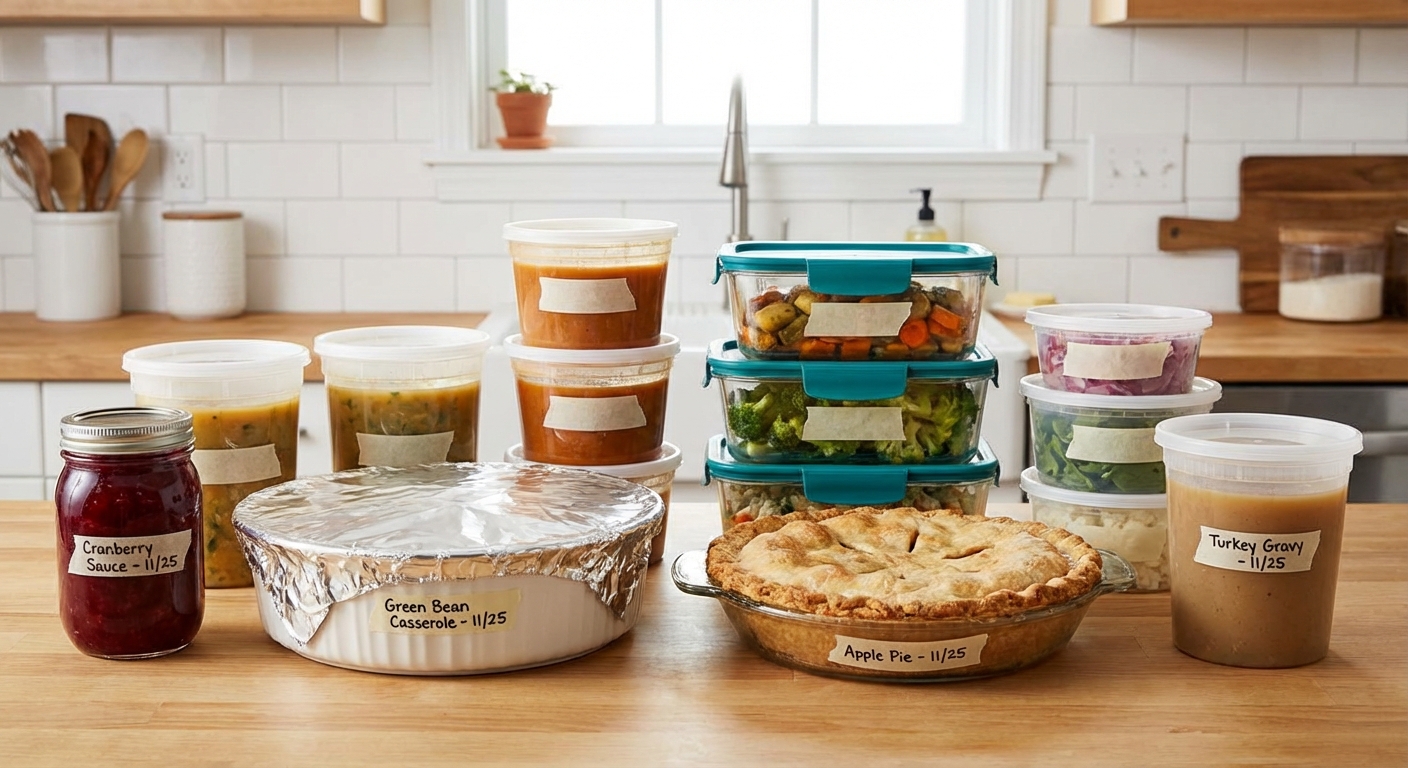
Proper storage preserves quality. Cover dishes with plastic wrap or foil. Label containers with contents and date. Stack efficiently to maximize refrigerator space.
Reheating requires planning. Dense casseroles take 45-60 minutes to heat through from refrigerator temperature. Add time to your day-of schedule. Cover with foil to prevent drying, removing the foil for the last 15 minutes to crisp tops.
For microwave reheating of side dishes, add a splash of water or broth to prevent drying. Stir midway through for even heating.
Invest in enough serving dishes. Transferring from storage containers to serving dishes takes time and creates last-minute dishwashing. When possible, prep and store in oven-safe dishes that go directly from refrigerator to oven to table.
Summary
Successful holiday meal prep means cooking in stages: prep ingredients 3-5 days out, make dishes that improve with time 2 days before, handle protein and fresh items 1 day before, and reserve only reheating and assembly for the holiday itself.
Create a reverse timeline from your meal time and assign specific tasks to each day. Label and organize prepped items in your refrigerator. Account for reheating time in your day-of schedule. With this approach, you’ll host a memorable meal without the stress of trying to cook everything simultaneously.