The “no tax on tips” provision allows qualifying workers to deduct 100% of their tip income from their federal taxes. If you work in a job where you receive tips (restaurants, bars, hotels, salons, and similar service industries), you may be able to claim this new deduction starting with your 2025 tax return filed in 2026.
The deduction was created by the One, Big, Beautiful Bill and represents one of the most significant tax changes for service workers in decades. To claim it, you’ll use the new Schedule 1-A when filing your federal return.
Here’s the important caveat: the deduction applies to federal income tax only. You’ll still owe Social Security and Medicare taxes (FICA) on your tip income, and state income taxes vary. But for federal purposes, qualifying tip income can now be fully deducted.
Who Qualifies for the Deduction
Not every worker who receives tips qualifies for the deduction. There are specific requirements you need to meet:
Income Limit: Your total wages (including tips) must be below $160,000 for the year. If you earn above this threshold, the deduction phases out and eventually disappears entirely for high earners.
Tip-Based Occupation: You must work in an occupation where tipping is customary. This includes servers, bartenders, baristas, hotel staff, hair stylists, nail technicians, taxi and rideshare drivers, delivery drivers, and similar positions.

Cash and Non-Cash Tips: Both cash tips and tips received through credit card transactions count toward the deduction. Tips added to digital payment apps like Venmo or Cash App also qualify, as long as they’re properly reported as income.
Employer Reporting: Your tips need to be properly reported. If you receive more than $20 in tips in any month, you’re required to report those tips to your employer, who includes them on your W-2. The IRS has historically scrutinized tip income, and that hasn’t changed, so accurate reporting remains important.
How to Claim the Deduction
Claiming the tip deduction involves a few steps when filing your 2025 return:
Step 1: Calculate Your Total Tip Income Add up all tips you received during 2025. This should match what’s reported in Box 7 (Social Security tips) of your W-2, though you should also include any cash tips you reported separately.
Step 2: Complete Schedule 1-A The new Schedule 1-A is where you’ll claim the tip deduction along with other new deductions from the One, Big, Beautiful Bill. You’ll enter your qualifying tip income in the designated section.
Step 3: Transfer to Form 1040 The deduction flows from Schedule 1-A to your Form 1040, reducing your adjusted gross income. This happens before you take the standard deduction or itemize, meaning it benefits everyone regardless of which method they use.
Most tax software has already been updated to handle Schedule 1-A, so if you’re using TurboTax, H&R Block, or similar programs, the process should be fairly automatic once you indicate you received tip income.
How Much Will You Actually Save?
The actual tax savings depend on your total income and tax bracket. Here’s an example of how the deduction might work:
Example: Sarah is a server who earned $35,000 in 2025, with $12,000 of that coming from tips. Without the deduction, her entire $35,000 would be subject to federal income tax. With the deduction, she can exclude the $12,000 in tips from federal taxation, so she’s only taxed on $23,000.
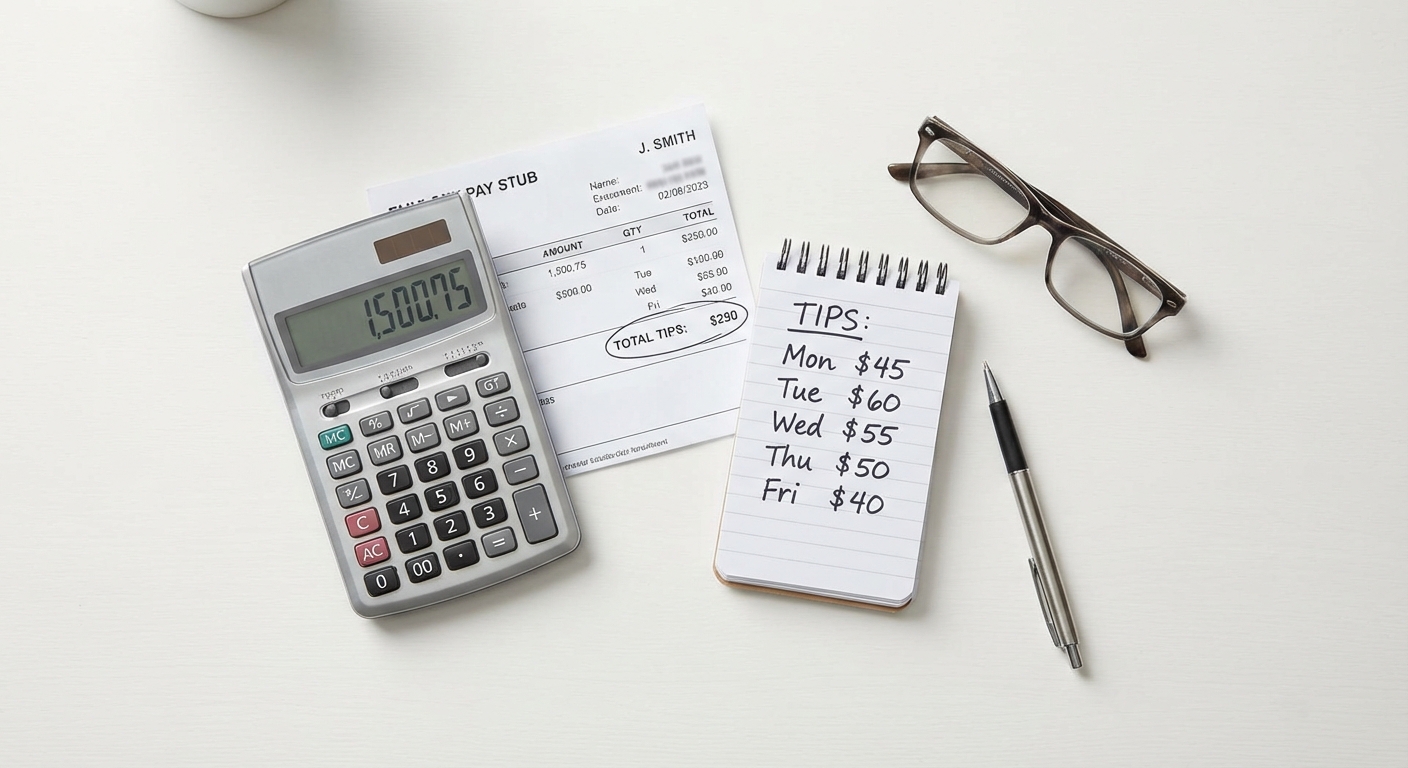
In the 12% tax bracket, that $12,000 deduction saves Sarah $1,440 in federal income tax. If she were in the 22% bracket, the savings would be $2,640.
Keep in mind that you’ll still pay:
- Social Security tax: 6.2% on tip income (up to the wage base limit)
- Medicare tax: 1.45% on all tip income
- State income tax: Varies by state; some states have adopted their own tip exclusions, others haven’t
So while the deduction doesn’t eliminate all taxes on tips, it can represent significant savings, especially for workers who receive a substantial portion of their income from tips.
What About Other New Deductions?
The tip deduction isn’t the only new tax break from the One, Big, Beautiful Bill. You may also qualify for:
No Tax on Overtime: If you worked overtime hours in 2025, the premium pay you received for those hours (typically time-and-a-half or double-time rates) may also be deductible. The overtime deduction uses similar income limits and is also claimed on Schedule 1-A.
Car Loan Interest Deduction: Interest paid on auto loans for personal vehicles may now be deductible. This is separate from the existing deduction for interest on business vehicle loans.
Enhanced Senior Deduction: Taxpayers 65 and older get an additional standard deduction increase under the new law.
Each of these deductions has its own requirements and limitations, so check whether you qualify for multiple benefits. You can claim all the deductions you’re eligible for.
Common Questions About the Tip Deduction
Do I need receipts or records of my tips? Yes, it’s wise to keep records. While the IRS will primarily rely on your W-2 reporting, maintaining a tip log or records of your earnings can help if your return is ever questioned.
What if my employer already withheld taxes on my tips? Your employer likely did withhold federal income tax on your reported tips throughout the year. When you claim the deduction, you’ll effectively get that money back as a larger refund (or lower balance due).
Does this apply to pooled tips? Yes. If your workplace uses tip pooling or tip sharing, the tips you receive through the pool count as your tip income and qualify for the deduction.
What if I also received service charges? Service charges (like automatic gratuities added to large parties) are technically wages, not tips, under IRS definitions. However, the law treats them similarly for purposes of this deduction, so they generally qualify.
Can self-employed workers claim this? If you’re self-employed and receive tips (like a freelance hairstylist or independent rideshare driver), you may still qualify. You’ll report the deduction differently since you don’t receive a W-2, but the benefit is available.
Key Takeaways
The “no tax on tips” deduction allows qualifying service workers to exclude their tip income from federal income taxes, potentially saving hundreds or thousands of dollars. To qualify, you must work in a tip-based occupation and earn less than $160,000 in total wages. The deduction is claimed on the new Schedule 1-A and reduces your federal tax liability, though Social Security, Medicare, and state taxes still apply to tip income.
If you work in restaurants, hotels, salons, rideshare, or similar service industries, this is a significant new benefit worth understanding. Make sure your tips are properly reported throughout the year, keep records of your earnings, and use tax software or a preparer familiar with the new Schedule 1-A when filing.
Sources
- Prepare to file in 2026: Get Ready for tax season with key updates, essential tips - Internal Revenue Service
- IRS releases tax inflation adjustments for tax year 2026 - Internal Revenue Service
- IRS Tax Season 2026: Key Dates, New Rules - Omni Tax Help