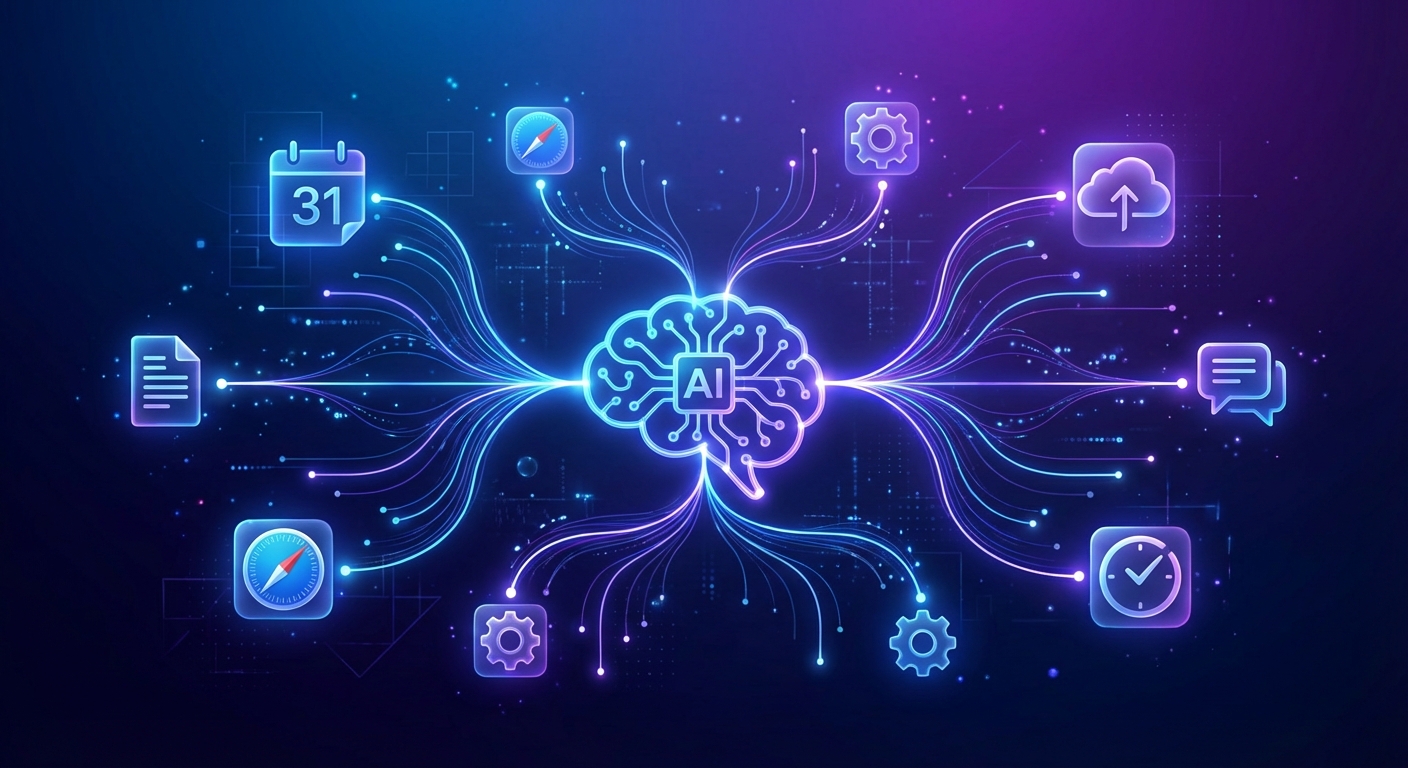
AI agents are artificial intelligence systems designed to autonomously complete multi-step tasks on your behalf. Unlike traditional chatbots that simply answer questions, AI agents can browse websites, fill out forms, send emails, schedule appointments, and coordinate multiple actions to accomplish goals you set for them.
Think of the difference this way: a chatbot is like asking someone for directions, while an AI agent is like having someone actually drive you to your destination, making all the turns and decisions along the way.
AI agents became one of the biggest technology trends in 2026, with major companies like OpenAI, Google, Anthropic, and Microsoft all racing to develop and deploy them. You may have already encountered them through features like ChatGPT’s “computer use” capability or Google’s Project Astra, even if you didn’t realize what you were using.
How AI Agents Differ from Chatbots
The key difference is autonomy. A standard chatbot responds to your input and waits for your next instruction. An AI agent takes your goal and works toward it independently, making decisions and taking actions without needing you to guide each step.
Traditional Chatbot Interaction:
- You: “What’s the best flight to New York next Tuesday?”
- Chatbot: “Here are some options…” (shows you information)
- You: “Book the 9am United flight”
- Chatbot: “I can’t book flights directly. Here’s a link to United’s website.”
AI Agent Interaction:
- You: “Book me a flight to New York for next Tuesday, arriving before noon, at the best price”
- Agent: (Searches multiple airlines, compares prices, selects best option, navigates to booking page, fills in your information, completes purchase)
- Agent: “Done. I booked you on the 9:15am United flight for $247. Confirmation sent to your email.”
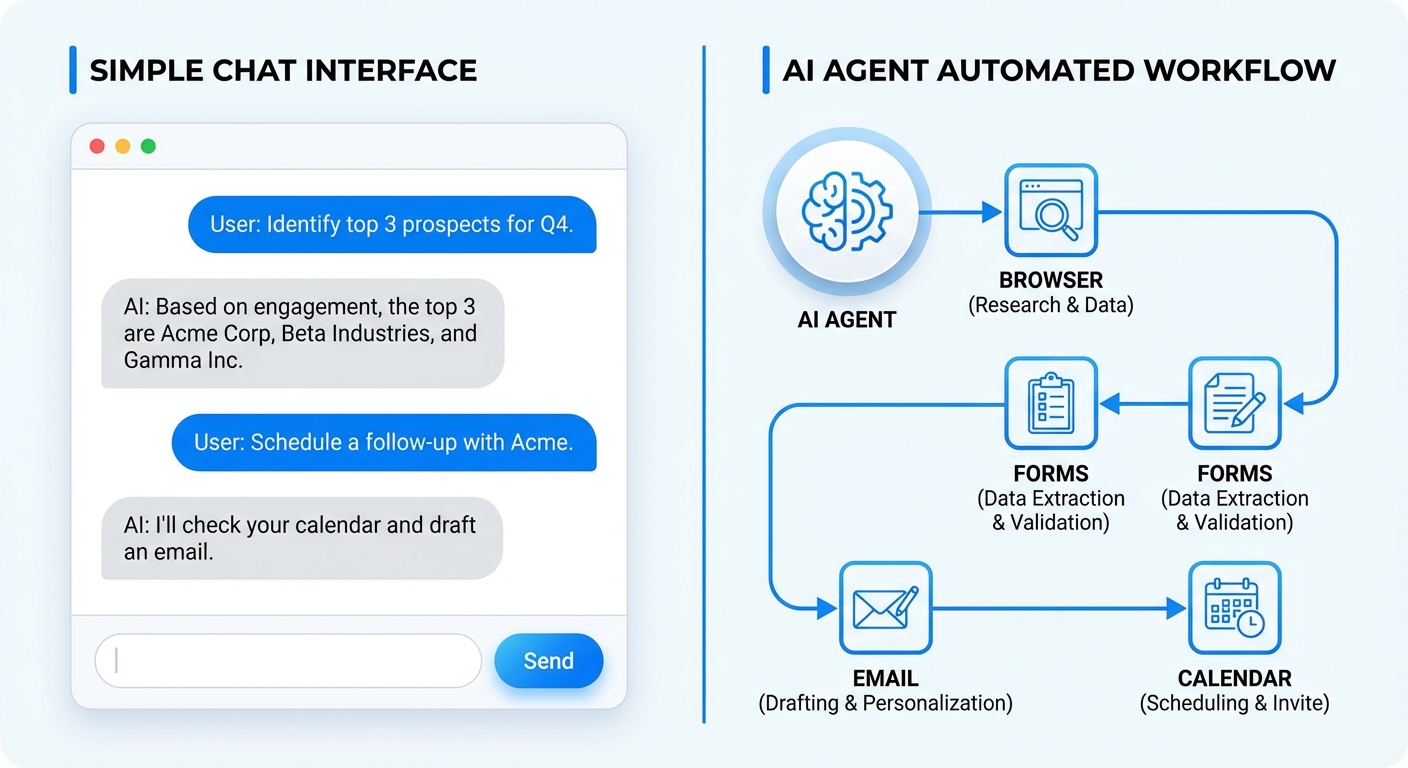
This autonomy requires several capabilities that chatbots lack. Agents need to understand context over multiple steps, remember what they’ve already done, make judgment calls when situations aren’t exactly what they expected, and interact with real software and websites rather than just generating text.
What AI Agents Can Actually Do
Current AI agents can handle a range of tasks, though their capabilities vary significantly depending on the platform:
Research and Information Gathering: AI agents can browse multiple websites, compile information from various sources, and synthesize findings into summaries or reports. For example, you could ask an agent to “research the best project management tools for small teams” and receive a comprehensive comparison rather than a list of links.
Administrative Tasks: Agents can send emails on your behalf, schedule meetings by coordinating calendars, fill out online forms, and manage routine communications. Some workplace agents can handle expense reports, time tracking, and similar administrative work.
Shopping and Booking: More advanced agents can complete purchases, book travel, make reservations, and handle other transactions that require navigating websites and entering payment information (with your authorization).
Data Entry and Processing: Agents excel at repetitive tasks like transferring information between systems, updating spreadsheets based on new data, or processing batches of similar requests.
Code and Technical Work: Specialized agents can write code, debug problems, manage files, and perform technical tasks that would normally require developer knowledge.
The Technology Behind AI Agents
AI agents combine several technologies to function:
Large Language Models (LLMs): The same technology that powers chatbots like ChatGPT or Claude provides the “brain” for understanding your requests and deciding what actions to take.
Tool Use: Agents are connected to “tools” that let them interact with the outside world. These might include web browsers, email clients, calendars, spreadsheet software, or specialized APIs for specific services.
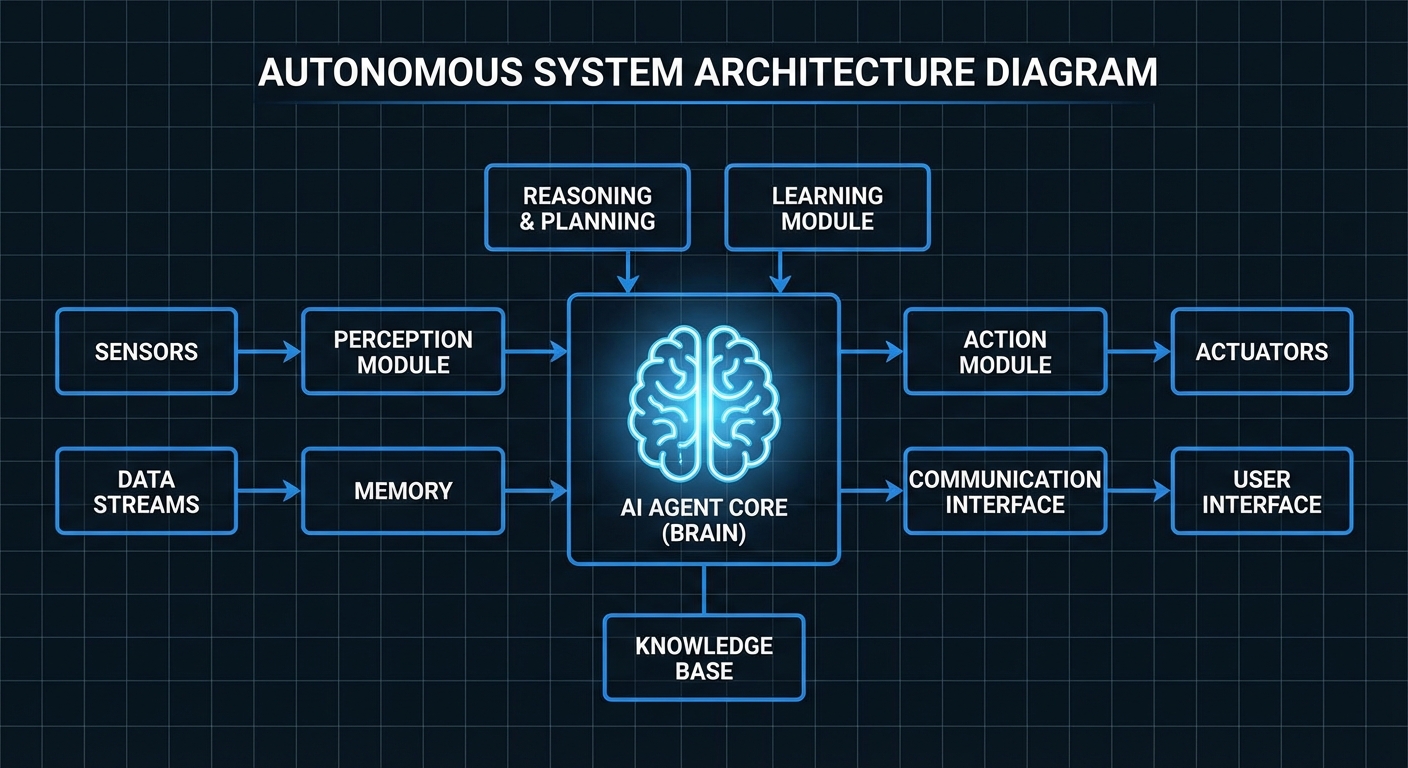
Memory and Context: Unlike simple chatbots that forget previous conversations, agents maintain memory of what they’ve done, what’s worked, and what’s failed. This allows them to build on earlier actions and avoid repeating mistakes.
Planning and Reasoning: More sophisticated agents can break down complex goals into sub-tasks, plan the order of operations, and adjust their approach when they encounter obstacles.
Current Limitations
Despite the hype, AI agents still have significant limitations that you should understand before relying on them:
Accuracy Issues: Research by Anthropic, Carnegie Mellon, and others has found that AI agents make errors too frequently for high-stakes business processes. A study in late 2025 found error rates of 15-30% on complex multi-step tasks, meaning agents might complete tasks incorrectly without realizing it.
Limited Understanding: Agents can misinterpret ambiguous requests or make assumptions that don’t match your intentions. If you ask an agent to “clean up my inbox,” it might delete emails you wanted to keep.
Security Concerns: Giving an AI agent access to your email, bank accounts, or other sensitive systems creates potential risks. If the agent is compromised or makes errors, the consequences could be significant.
Unpredictable Behavior: Because agents make autonomous decisions, they can sometimes take unexpected actions. They might click on the wrong button, enter incorrect information, or pursue approaches you wouldn’t have chosen.
Cost: Many agent capabilities require substantial computing resources, making them expensive for extended use. Some providers charge per action or per minute of agent time.
Where to Try AI Agents
Several platforms currently offer AI agent capabilities:
ChatGPT (OpenAI): The “computer use” feature in ChatGPT Plus allows the AI to control a virtual computer to complete tasks. OpenAI’s Operator agent (in preview) is designed specifically for autonomous task completion.
Claude (Anthropic): Anthropic’s Claude offers “computer use” capabilities that allow it to navigate screens and interact with software. Available to developers and through some partner applications.
Google: Project Astra and related initiatives are integrating agent capabilities into Google’s AI products, though availability varies by region and service.
Microsoft Copilot: Microsoft’s AI assistant includes agent-like features for tasks within Microsoft 365 applications, automating workflows in Word, Excel, Outlook, and other products.
Specialized Agents: Numerous startups offer agents for specific use cases, like customer service automation, code generation, research assistance, and data analysis.
Key Takeaways
AI agents are autonomous AI systems that can complete multi-step tasks by browsing the web, using software, and making decisions independently. They differ from traditional chatbots by taking action rather than just providing information. While the technology is advancing rapidly, current agents still have limitations in accuracy, security, and reliability that make them best suited for lower-stakes tasks or situations where a human reviews their work.
If you’re considering using AI agents, start with simple, reversible tasks where errors won’t cause significant problems. As the technology matures, expect agents to become more capable and reliable, but for now, treat them as helpful assistants that still need supervision rather than fully autonomous workers.
Sources
- What’s next for AI in 2026 - MIT Technology Review
- In 2026, AI will move from hype to pragmatism - TechCrunch
- The trends that will shape AI and tech in 2026 - IBM
- What’s next in AI: 7 trends to watch in 2026 - Microsoft